









Scorpion Season in Arizona
The Top Mistakes Residents Make in March
By Georgia A. Clubb, Advanced Scorpion Specialist, Founder of Seal Out Scorpions™
March to April in Phoenix is not peak season.
It is the last proactive window before summer.
Many winter visitors begin preparing to leave in late March and April. Real estate listings increase. Irrigation cycles often increase as temperatures climb. Soil behavior shifts. Structures begin to expand. Service demand rises.
Homes begin to show early activity.
By June, homeowners are reacting — and heat is working against immediate control measures. Appointment delays increase. Chemical performance becomes more temperature-sensitive. Scorpion concerns for many start to rise.
Here are some of the most common mistakes made during this window:
The Top March Mistakes
- Waiting until visible activity increases
- Assuming spraying equals prevention
- Believing food source is the core driver
- Hiring a pest control company as an unlicensed contractor to perform structural sealing
- Hiring a contractor for pest management without corrective pest management licensing
- Believing a license equals skill
- Not understanding what products are being used on the property
- Accepting rotating chemical programs as strategy
- Allowing low-grade or premixed chemical cocktails
- Overlooking neighborhood pathway dynamics
- Sealing incorrectly and rerouting intrusion
- Ignoring hundreds of micro air leaks throughout the house
Now let’s break this down properly.
Mistake 1: Waiting Until Activity Increases
March and April are the final proactive window before summer.
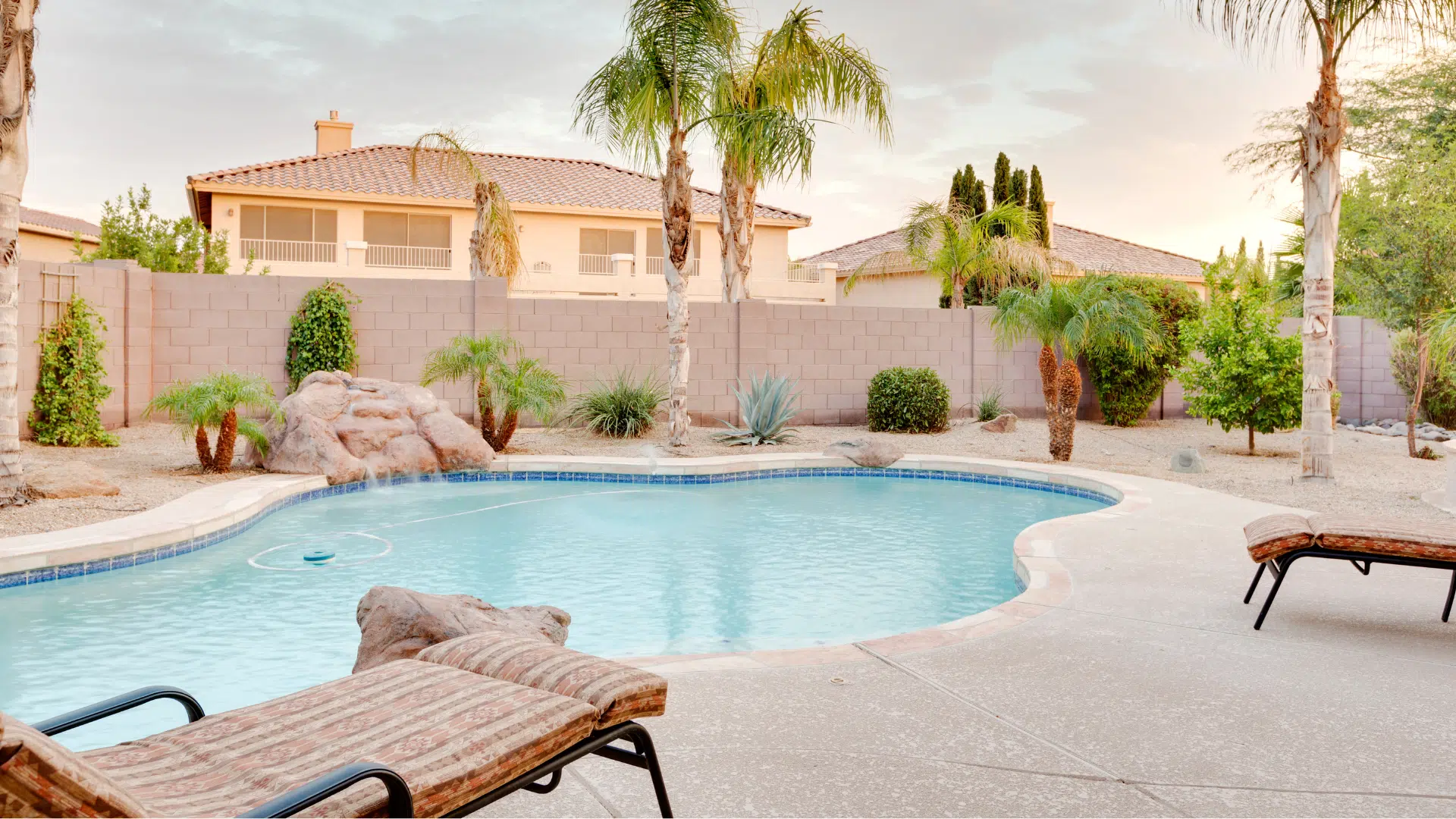
By June:
- Surface temperatures spike.
- Soil expansion changes behavior.
- Heat works against immediate knockdown.
- Service calls increase.
- Schedules tighten.
Proactive homeowners prepare before pressure increases.
Reactive homeowners call when activity becomes uncomfortable.
Those are two very different timelines.
Mistake 2: Thinking Spraying Equals Prevention
Chemical application for scorpions is suppressive.
It does not fix structural intrusion pathways that it flushes scorpions to.
If a home has:
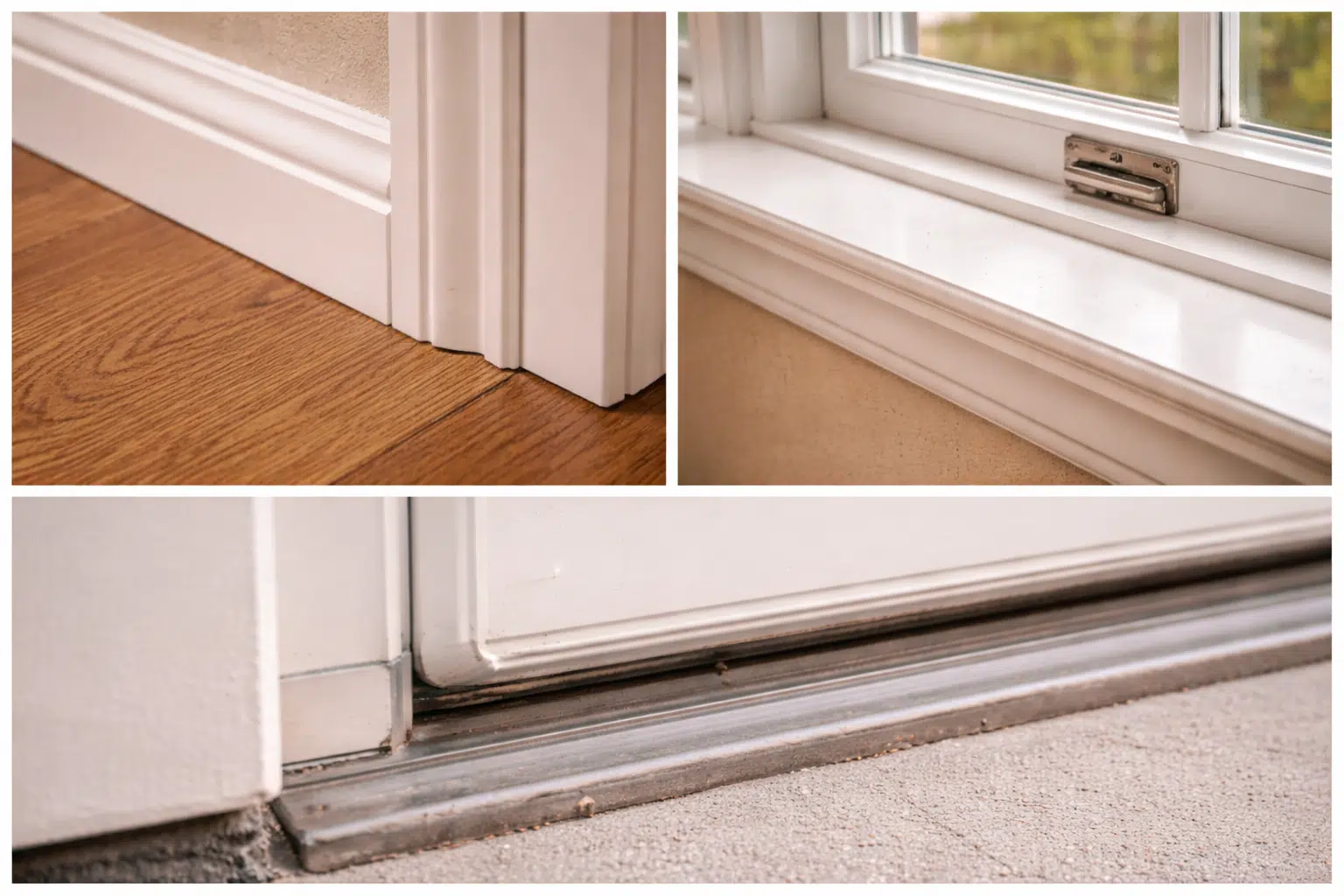
- Open weep screeds
- Improperly sealed slab-to-wall transitions
- Micro air leaks
- Interior attic bypass openings
- Electrical and plumbing penetrations
- Construction voids
- Poor interface transitions between materials
…then scorpions can enter regardless of chemical “barrier”.
Reduction is not exclusion.
And exclusion requires airflow, weatherization, construction, and scorpion biology knowledge.
Mistake 3: Confusing Food Source With Cause
Insects exist where environmental conditions allow them to exist.
Scorpions are not roaming neighborhoods “hunting prey” in the way many assume. Prey presence does not create scorpions. It coincides with environmental suitability.
Over-focusing on food sources distracts from structural vulnerabilities.
The structure is the variable you can control.
Mistake 4: Believing Licenses Are Interchangeable
This is one of the most misunderstood areas in Arizona.
A pest control license does not authorize structural corrective sealing.
A contractor license does not authorize corrective pest management.
They are different disciplines.
Both licenses are required for comprehensive integrated exclusion work.
And a license alone does not equal skill because, for this gray trade, there is no classification, no schooling, and no test assessments
True structural exclusion requires:
- Understanding building envelope behavior
- Knowledge of sealant chemistry
- How expansion and contraction shift materials
- Weather pattern impact on adhesion
- Weep system protection
- Hundreds of Micro air movement and pressure differentials not addressed in weatherization
Certification through weatherization programs or formal Building Performance Sealing® education adds quality assurance and strategy depth most companies and technicians don’t have.
Sealing is not caulking.
And incorrect sealing can:
- Reroute scorpions to less desirable interior areas
- Create weep problems
- Damage materials
- Create aesthetic defects
- Trap moisture
- Void warranties
Education, experience, precision, and skill matter.
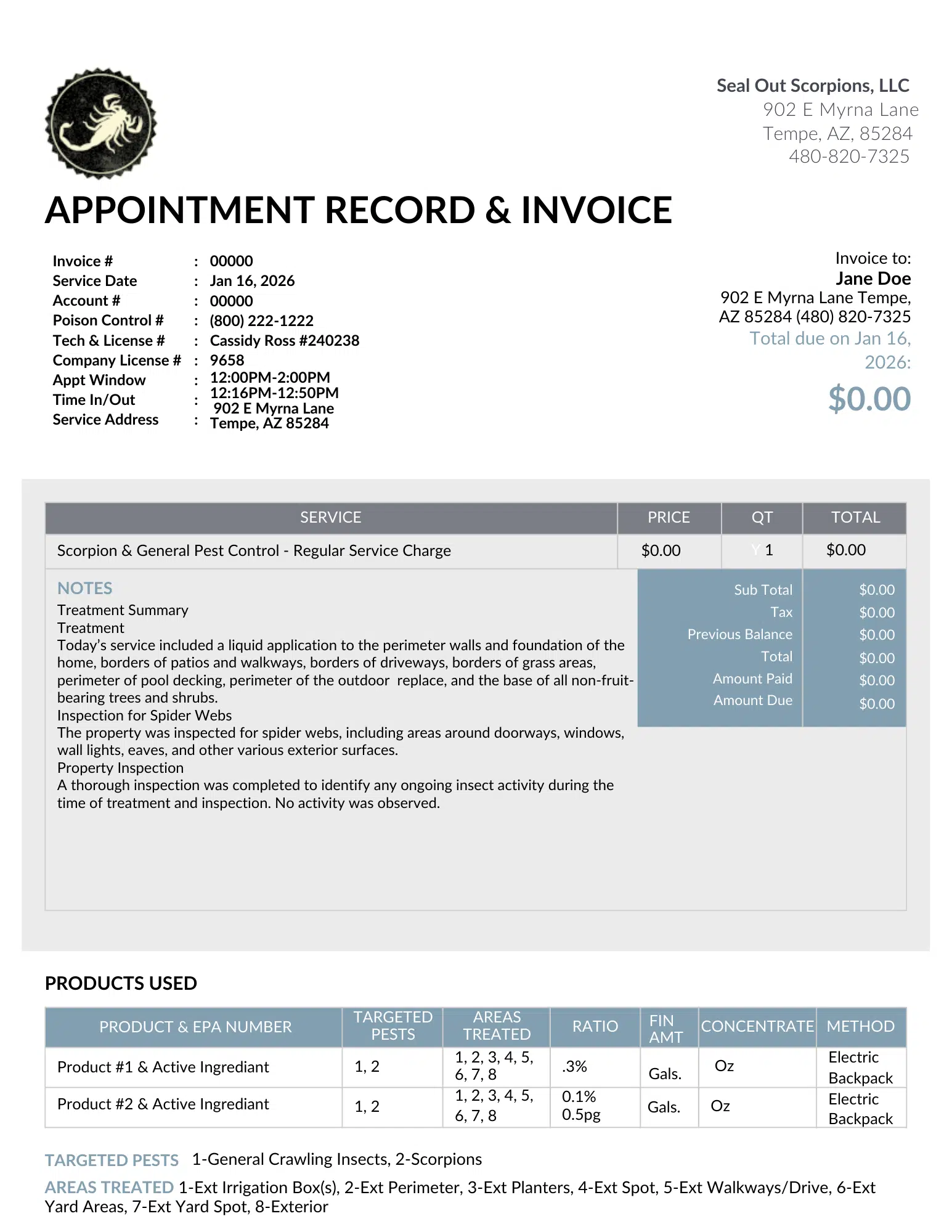
Mistake 5: Not Understanding What Pest Control Is Actually Applying
Homeowners often do not know:
- What active ingredient is being used
- What formulation
- What concentration
- What application method
- Whether the product is low-grade
- Whether it is a premixed chemical cocktail
- Whether it is rotated unnecessarily
Rotating products for scorpions is not a strategy.
It often reflects uncertainty or general pest control treatments.
Low-grade insecticides, premixed combinations, or inferior application methods reduce effectiveness and increase cost over time.
Corrective pest management must be deliberate, targeted, and technically appropriate.
Mistake 6: Ignoring Neighborhood Pathways
Scorpion intrusion is not always isolated to one structure.
Neighborhood grading, shared walls, irrigation patterns, adjacent vacant lots, block interfaces, and perimeter conditions influence migration.
Technicians must assess beyond the home footprint.
Failure to evaluate neighborhood pathways results in:
- Repeat activity
- Misplaced blame
- Over-reliance on chemical suppression
Scorpion management is structural + environmental + corrective.
Mistake 7: Sealing What Should Not Be Sealed
Not all gaps should be filled.
Expansion joints and block walls are often misunderstood. Improperly sealing them can:
- Create weep interference
- Reroute movement
- Compromise performance
- Damage aesthetic lines
Strategic omission is part of expertise.
Knowing what not to seal is as important as knowing what to seal.
The Reality of March
March through April is not the panic season.
It is preparation season.
By June:
- Heat complicates immediate control.
- Service volume increases.
- Reaction replaces strategy.
Homes begin to show activity when structural conditions allow it.
The question is not whether scorpions exist.
The question is whether the structure allows entry.
Scorpions are curable, preventable, or reducible depending on the goal.
The difference is structure.
The difference is licensing discipline.
The difference is execution quality.
March is the last proactive window before summer.
What is corrected now determines what is experienced later.
About Georgia Clubb & Seal Out Scorpions®
Seal Out Scorpions is led by Georgia A. Clubb, Advanced Scorpion Specialist, together with William L. Clubb and Michael C. Golleher — Certified Building Analysts and Envelope Professionals through the Building Performance Institute, with additional Building Science Certificates and studies in Urban & Industrial IPM through Purdue University. Their team includes licensed pest management and sealing specialists who pioneered Building Performance Sealing to solve scorpion problems at the structural level.