





Why Scorpions Keep Getting Into Your Home: Understanding Airflow and Hundreds of Hidden Pathways
If you live in Arizona and continue finding scorpions inside your home, one of the first questions is usually: Where are they getting in?
That sounds like a simple question.
After more than 25 years of working specifically with scorpions and Arizona homes, we have learned that it often isn’t.
The opening where you find a scorpion may not be where that scorpion entered the structure. In many homes, there can be hundreds of openings, connections and concealed pathways between the exterior of the building and the interior living space.
Understanding those pathways requires looking at the house differently.
Think of a House Like a Rigid Balloon, With a Maze Inside
A balloon is an easy way to understand part of what happens with air pressure.
Put air into a balloon and the balloon expands. A house cannot expand that way. When pressure differences occur, air moves through available leakage points in the building.
Those pressure differences can be influenced by the HVAC system, exhaust fans, wind, temperature differences and other conditions. Building science recognizes that air moves across building enclosures as a result of pressure differences, and that homes can have many pathways for air leakage.
But a house is much more complicated than a balloon.
Between the outside of the home and the room you are standing in is a maze.
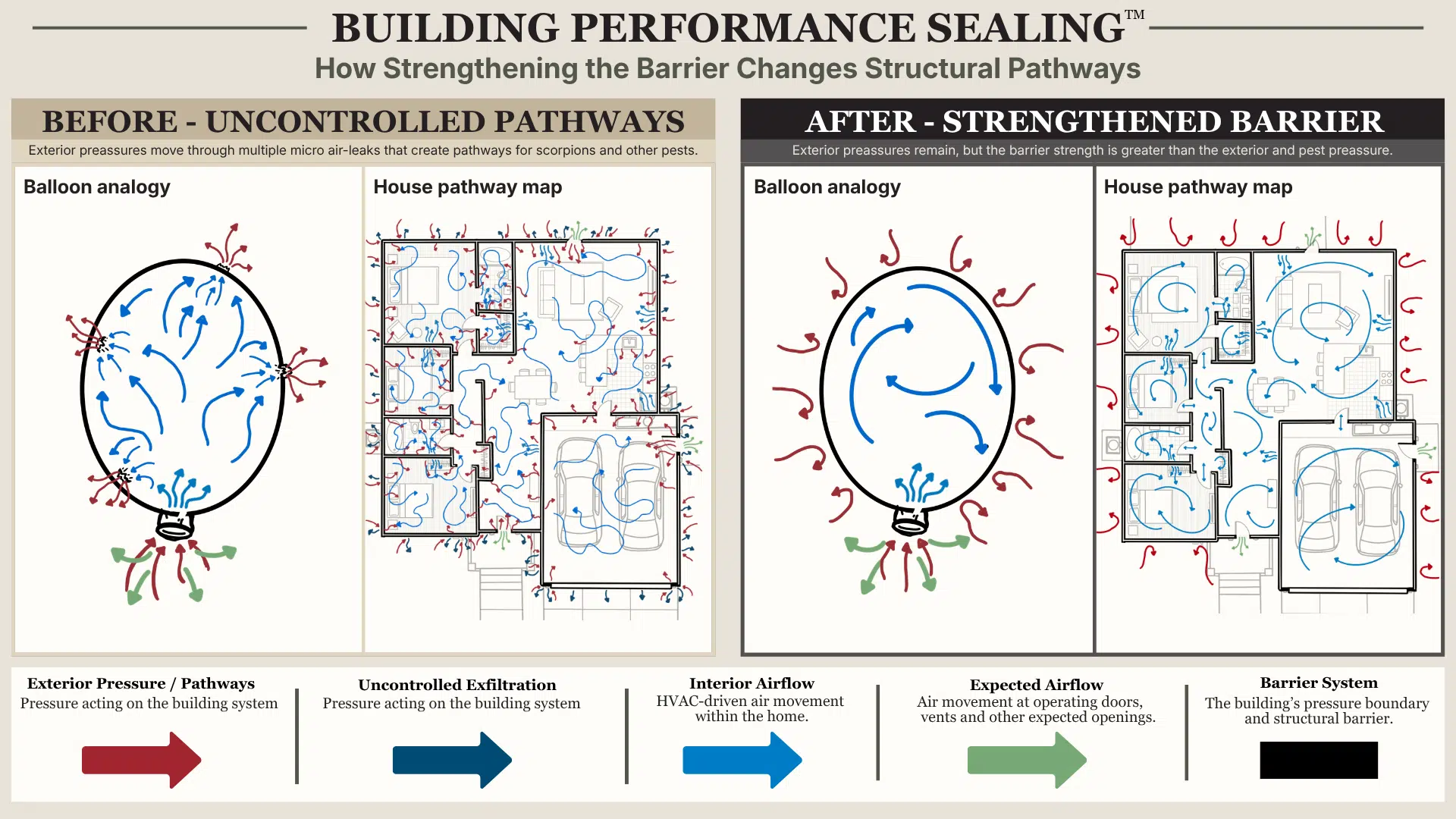
There are wall cavities, framing connections, attic spaces, soffits, plumbing penetrations, electrical penetrations, cabinetry, mechanical chases, ceiling penetrations and countless construction joints and transitions.
Some of these openings are visible. Many are not.
The U.S. Department of Energy specifically identifies hidden air-leakage locations around wiring, plumbing, ducts, wall and floor connections, top and sill plates, rim joists and other building assemblies. Plumbing openings, for example, can be hidden below sinks, beneath tubs, behind appliances and inside wall cavities.
To us, that matters for pest management.
Air Pathways Can Also Be Pest Pathways
The Arizona bark scorpion is particularly relevant to this discussion because it is a climbing species capable of occupying very small protected spaces and wall voids.
University of Arizona Cooperative Extension documents bark scorpions entering buildings around poorly fitted doors, vents and exterior wall openings. More importantly, once a bark scorpion gets into a wall void, it can move through the structure and gain access to the interior around electrical faceplates, pipe collars and other openings.
That changes the way we look at a scorpion found inside a home.
If you find one coming from behind a baseboard, that does not necessarily mean it entered the house at the baseboard.
If you find one near an electrical outlet, the outlet may be an interior access point from a wall cavity, not the original exterior entry point.
The same applies to plumbing openings, cabinetry, ceiling penetrations and other locations where homeowners unexpectedly find scorpions.
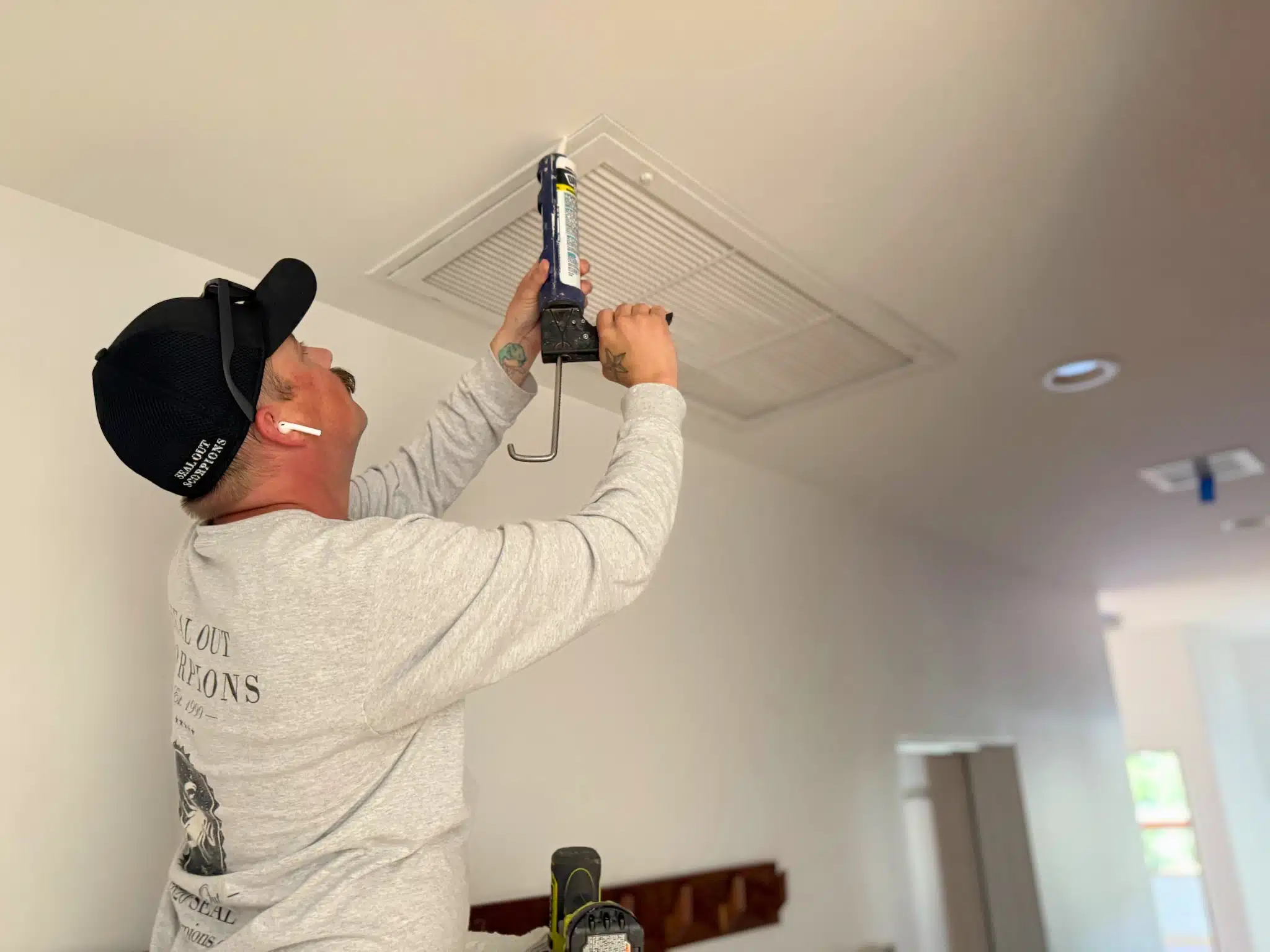
Where a scorpion appears and where it entered the structure can be two very different places.
Why Sealing the Obvious Openings May Not Solve the Full Problem
This is where pest sealing can become more complicated than it appears.
Imagine that air is moving through several connected openings in a structure. Properly seal one leakage point and you have changed that pathway. The pressure difference did not necessarily disappear. Air can move through another available weakness in the system.
That does not mean you shouldn’t seal the first opening. It means you need to understand what you are changing.
This is why we don’t approach Building Performance Sealing as simply walking around a house looking for holes.
The question isn’t only:
What can we seal?
The better questions are:
Where does this opening lead? Why is it there? What does it connect to? Is air moving through it? Is it part of a larger structural pathway? What is the appropriate way to address it?
And sometimes the answer is not caulk.
Not Every Opening Needs Caulk
“Caulk the cracks” has become almost synonymous with pest sealing.
Caulk is an important sealing material. We use it where it is appropriate.
But a house is constructed from different materials, assemblies and mechanical components. Openings vary tremendously in size, movement, location, exposure and function.
Depending upon the condition, the appropriate solution could involve a sealant, foam, backer material, rigid material, screening, weather-stripping, a mechanical correction or another building-specific method.
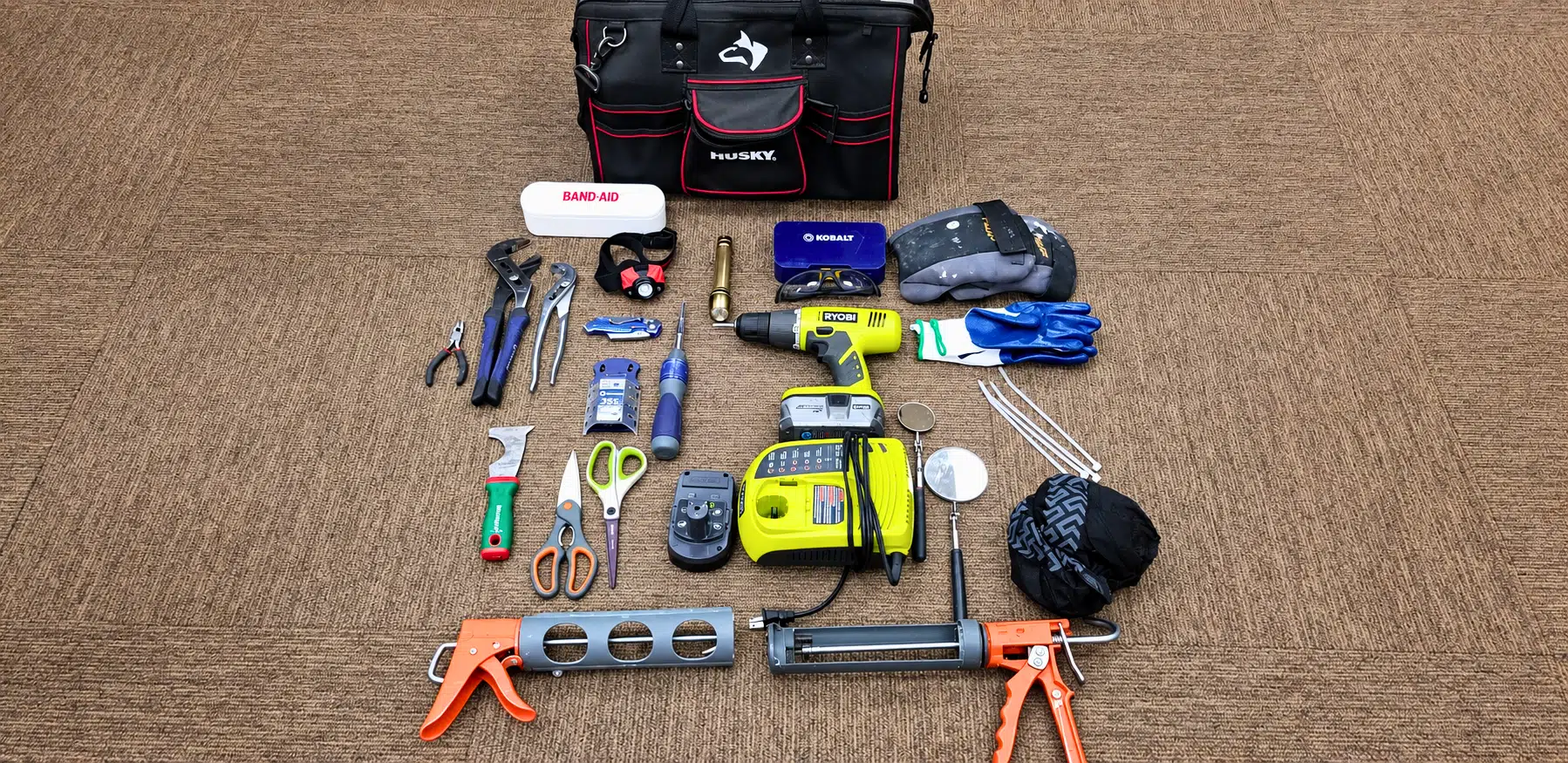
There are also openings that should not simply be plugged because they perform an intended building function. University of Arizona guidance, for example, specifically cautions that weep openings serve a function and should be appropriately screened rather than simply sealed shut.
Knowing what not to seal is part of knowing how to seal a building.
The goal isn’t to put the greatest possible amount of caulk into a house.
The goal is to strengthen the appropriate barriers.
Doors Are Different
Exterior doors deserve their own discussion because a door is not simply another hole that can be permanently sealed.
It is a mechanical component of the building.
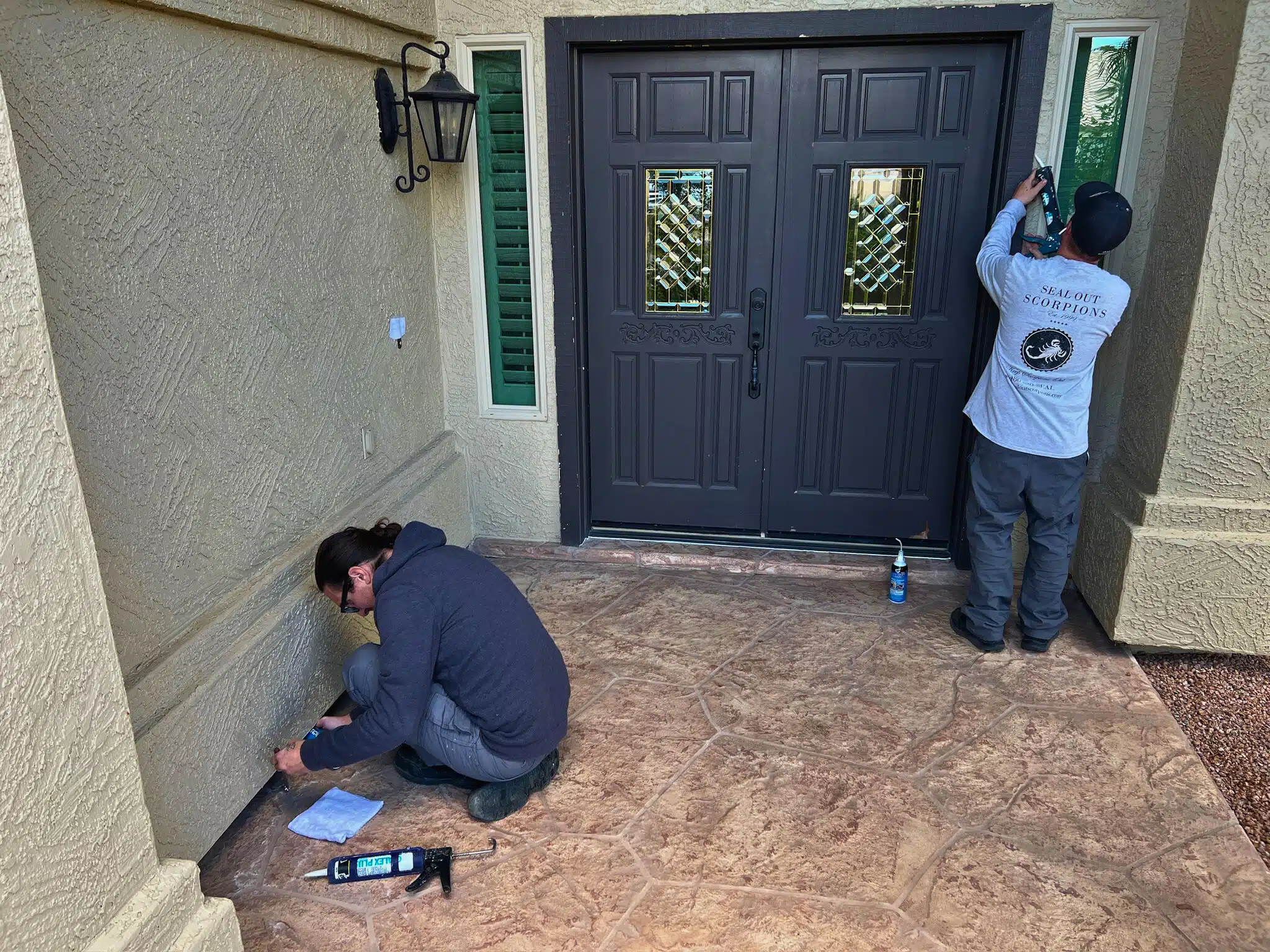
It has to open and close. It has a frame, threshold, weather-stripping, sweep and operating clearances. Those components wear, move and require adjustment.
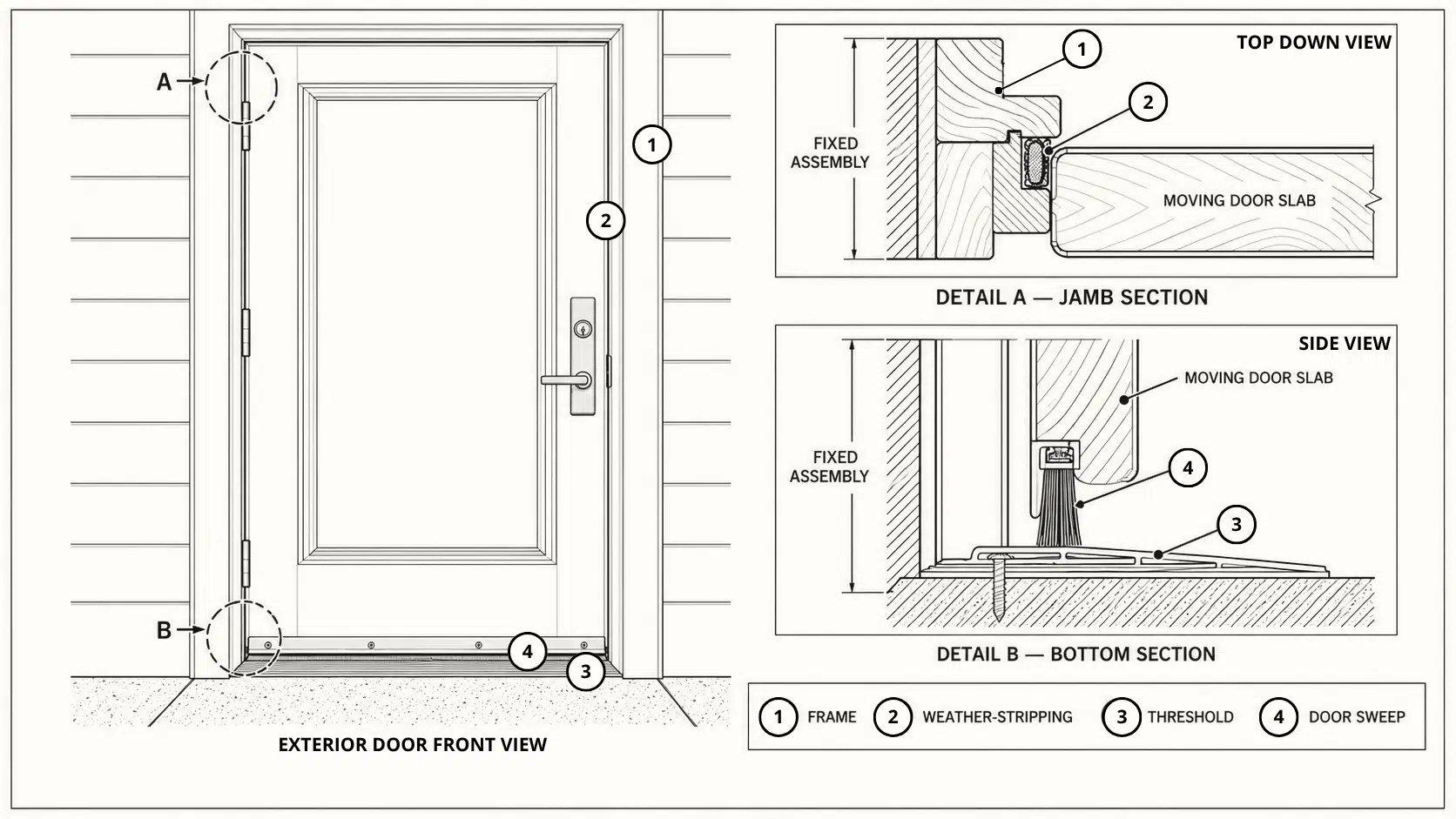
And people use the door.
That makes doors one of the most challenging components of a scorpion barrier.
University of Arizona guidance repeatedly identifies poorly fitted doors, weather-stripping and door sweeps as important scorpion entry concerns.
A homeowner can spend considerable effort sealing hundreds of stationary openings and still have a vulnerability at a frequently used exterior door.
That is why we evaluate doors differently from static penetrations in the building.
A door is not just something we “seal.”
It is a mechanical part of the Pest Barrier System that has to continue functioning while maintaining the strongest practical barrier against pest entry.
This Is Why SOS Uses Building Performance Sealing
Building Performance Sealing addresses the home as a system.
We are not simply sealing where pests are seen.
We identify and strengthen the network of barriers and pathways that allows air and pests to move into and through the structure, using the appropriate sealing material and method for each condition.
That requires us to look at the house from two directions at the same time.
We need to understand the building: airflow, pressure, construction, wall and ceiling assemblies, penetrations, mechanical components and concealed pathways.
We also need to understand the pest: where Arizona bark scorpions live, how they move, where the pressure exists around the property, how they interact with the structure and where they can transition from exterior environments into structural spaces and ultimately into the living environment.
That intersection is where Building Performance Sealing for scorpions becomes different from simply sealing visible openings.
The University of Arizona recognizes pest-proofing structures as one of the most effective tools for reducing scorpion contact and also recognizes that scorpions are difficult to manage with pesticides alone.
We agree.
But after working on Arizona homes and scorpion problems since 1999, we take the concept further.
A house isn’t just an exterior envelope with a few holes in it.
It is a dynamic building with pressure differences, air movement, mechanical components and a maze of interconnected structural spaces.
And when scorpion pressure exists around that building, every weakness in that system matters.
The objective is not simply to find a hole and close it.
It is to understand the system behind the opening, understand the pest pressure outside of it, and build a barrier system stronger than the pressure working against it.
Building Performance Sealing Is Not the Same as Pest Sealing
There is an important distinction between Building Performance Sealing and services commonly described as contractor-grade or pest-control-grade scorpion sealing.
Closing openings is part of the work. It is not the entire discipline.
A contractor performing pest sealing may approach the home primarily from the construction side: identify openings and determine how to physically close them. A pest management company may approach sealing from the pest side: identify likely pest access points and exclude them.
Seal Out Scorpions operates at the intersection of both disciplines, with building science added to the equation.
SOS is a licensed contractor and a licensed pest management firm. Our Building Performance work incorporates micro-weatherization principles, and SOS is a Building Performance Institute GoldStar Contractor. Our team includes Certified Building Analysts and technicians trained in building science and Integrated Pest Management.
That combination is intentional.
To control scorpions at the structural level, we believe you need to understand more than how to close an opening. You need to understand the pest outside the structure, the construction of the home, the building envelope, pressure and airflow, the concealed maze of structural pathways, mechanical components such as doors, appropriate sealing materials and methods, and what happens to the system when a pathway is changed.
That is why we call our process Building Performance Sealing, rather than simply scorpion sealing.
We are looking at the home from the pest-management side, the contractor side and the building-performance side at the same time.
Because for scorpion control, it all matters.
By Georgia A. Clubb, Advanced Scorpion Specialist, Founder of Seal Out Scorpions®
About Georgia Clubb & Seal Out Scorpions®
Seal Out Scorpions is led by Georgia A. Clubb, Advanced Scorpion Specialist, together with William L. Clubb and Michael C. Golleher — Certified Building Analysts and Envelope Professionals through the Building Performance Institute, with additional Building Science Certificates and studies in Urban & Industrial IPM through Purdue University. Their team includes licensed pest management and sealing specialists who pioneered Building Performance Sealing to solve scorpion problems at the structural level.