







Arizona’s 2026 Scorpion Season: Rising Sting Reports, Record Scorpion Pressure and the Growing Anascorp Market
Something caught my attention this week.
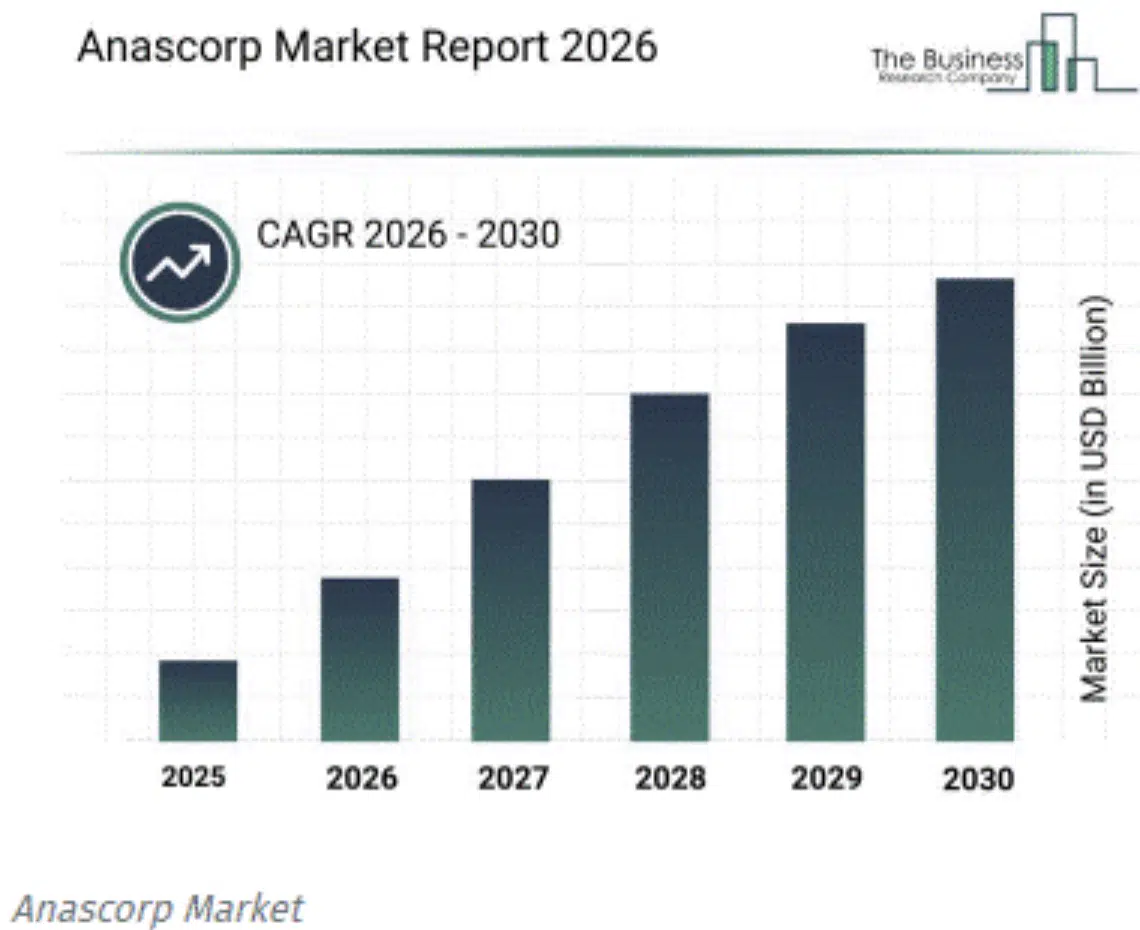
On September 4, 2026, The Business Research Company released information from its 2026 Anascorp Market Report forecasting continued growth in the market for scorpion antivenom.
The reasons behind that forecast are what caught my attention.
The report identifies the incidence of scorpion envenomation, emergency department utilization, effectiveness of antivenom therapy and regional venom exposure risk among the factors that have historically driven the Anascorp market. Looking forward, the report identifies climate-related changes affecting venom exposure, improved access to emergency medical services, expansion of trauma care, increased public-health funding and greater awareness of venom-treatment protocols among the factors expected to drive future growth.
That is interesting to us because we are seeing another side of this story from the field in Arizona.
Seal Out Scorpions has specialized in Arizona scorpion problems since 1999. During the 2026 season, we have experienced record call pressure from homeowners dealing with scorpions.
At the same time, Arizona’s weather has been unusual, poison-center sting reports are elevated, and now market researchers studying the future demand for scorpion antivenom are identifying scorpion envenomation and climate-related changes among the factors affecting this market.
These are different pieces of information coming from very different places.
Together, they deserve attention.
What Is Happening With Scorpions in Arizona in 2026?
We have been saying throughout this season that 2026 feels different.
That statement isn’t based solely on the number of telephone calls coming into our office. Our technicians and field teams are seeing substantial scorpion pressure during nighttime UV searches throughout the Phoenix metropolitan area.
Some properties are producing dozens of scorpions during a search. We are seeing adults, juveniles and areas of concentrated activity. We are also seeing significant cricket, roach and other arthropod activity on properties.
And we are hearing from homeowners who have lived in the same house for years and suddenly believe they have a scorpion problem.
The Arizona poison-center numbers give us another measurement.
Banner Poison & Drug Information Center is the primary poison emergency resource for Maricopa County and manages envenomation cases throughout the area. Banner says the majority of its envenomation cases are scorpion stings and that cases increase during the warmer months.
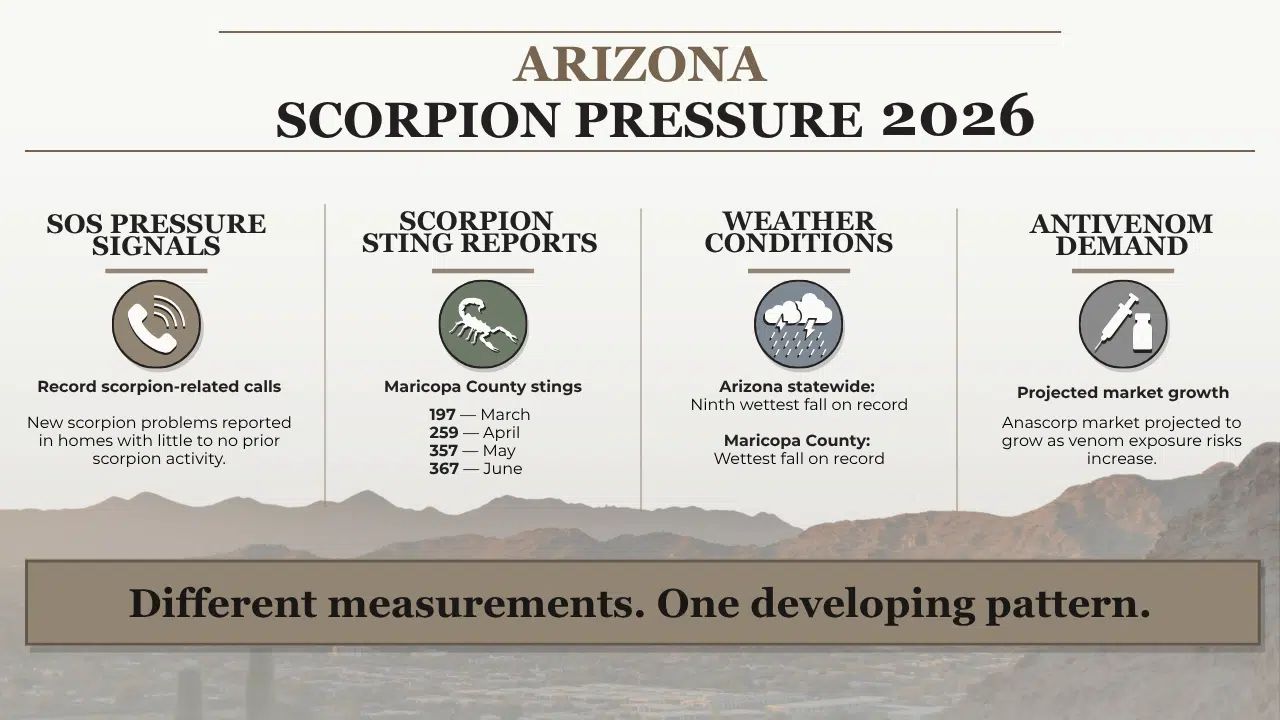
In March 2026 alone, Banner recorded 197 scorpion stings in Maricopa County.
The numbers continued climbing as temperatures increased:
March: 197 scorpion stings
April: 259
May: 357
June: 367
By June, Banner was already managing hundreds of scorpion stings per month.
That is the medical side of scorpion pressure.
We are seeing the residential side.
Then Look at the Weather Leading Into This Season
Scorpions don’t live independently of their environment.
Temperature, moisture, prey populations, landscape conditions, shelter and development all influence the ecosystem in which they live.
Arizona came into the 2026 season following an extraordinary sequence of weather.
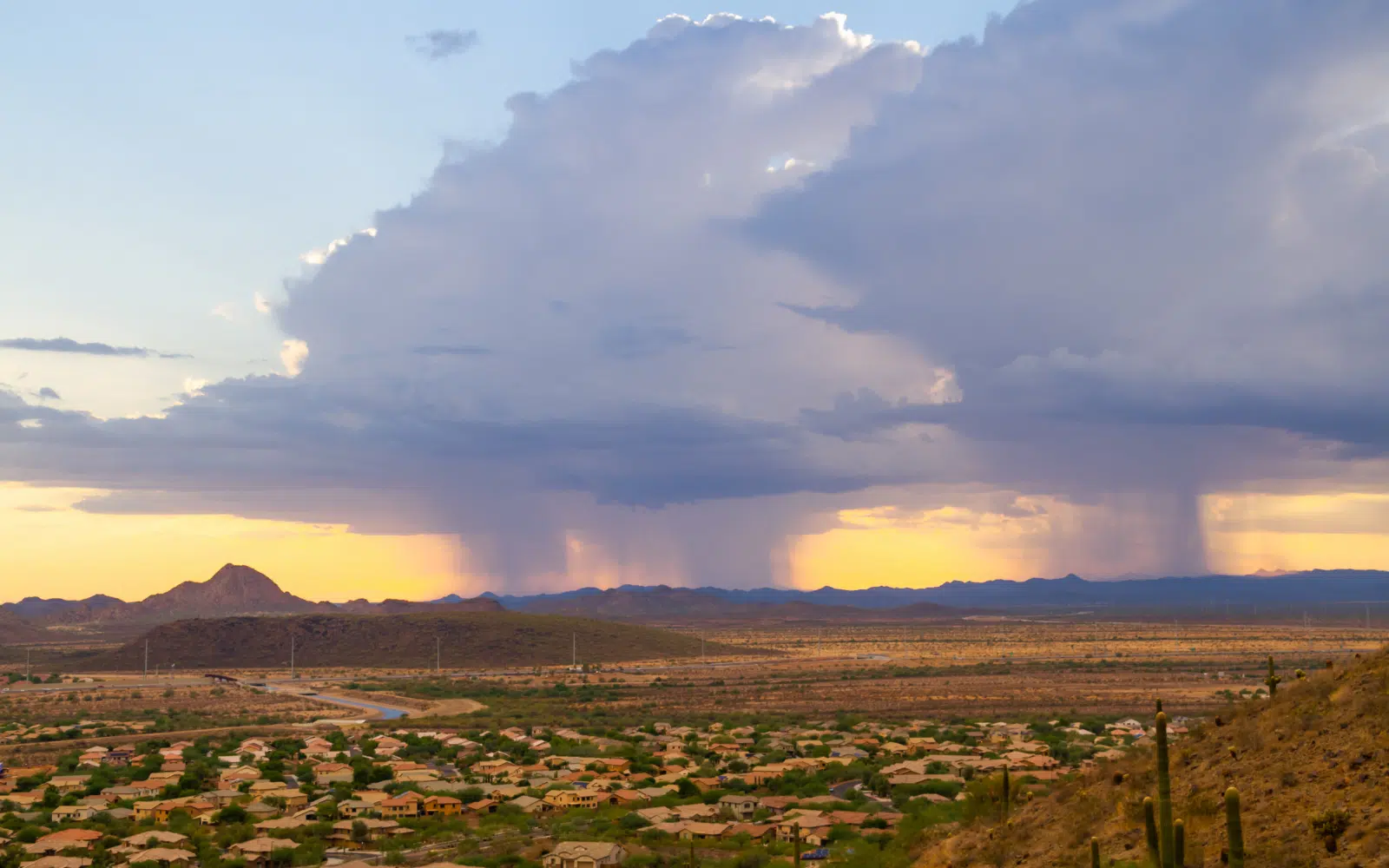
Arizona’s fall of 2025 ranked as the 9th wettest meteorological fall on record. Then the temperature pattern became even more significant. October 2025 through March 2026 ranked as the hottest October through March period on record in Arizona.
March was exceptional.
Every Arizona county experienced its hottest March on record. Phoenix reached 105°F, Tucson reached 102°F and Yuma reached 109°F.
National Weather Service records for Phoenix show just how abnormal the month was.
Phoenix’s average March high was 92.9°F compared with a normal 78.1°F, nearly 15 degrees above normal. The city experienced 22 days at or above 90°F, when the normal number is about two. Phoenix also recorded nine days at or above 100°F during March.
That is essentially an early start to the environmental conditions we normally associate with scorpion season.
From our perspective as a regional scorpion specialist, this matters.
Scorpion pressure isn’t created at the foundation of a house. It develops throughout the surrounding environment.
Scorpions Are Part of an Ecosystem
When we evaluate a scorpion property, we aren’t only looking for scorpions.
We look at the entire pest environment.
Crickets, roaches and other arthropods are food sources. Moisture affects insects and vegetation. Landscape features create shelter and pathways. Block walls can function as movement corridors. Irrigation, drainage, artificial turf, vegetation, rock, utility easements and neighboring properties can all influence what develops around a home.
Then there is the structure itself.
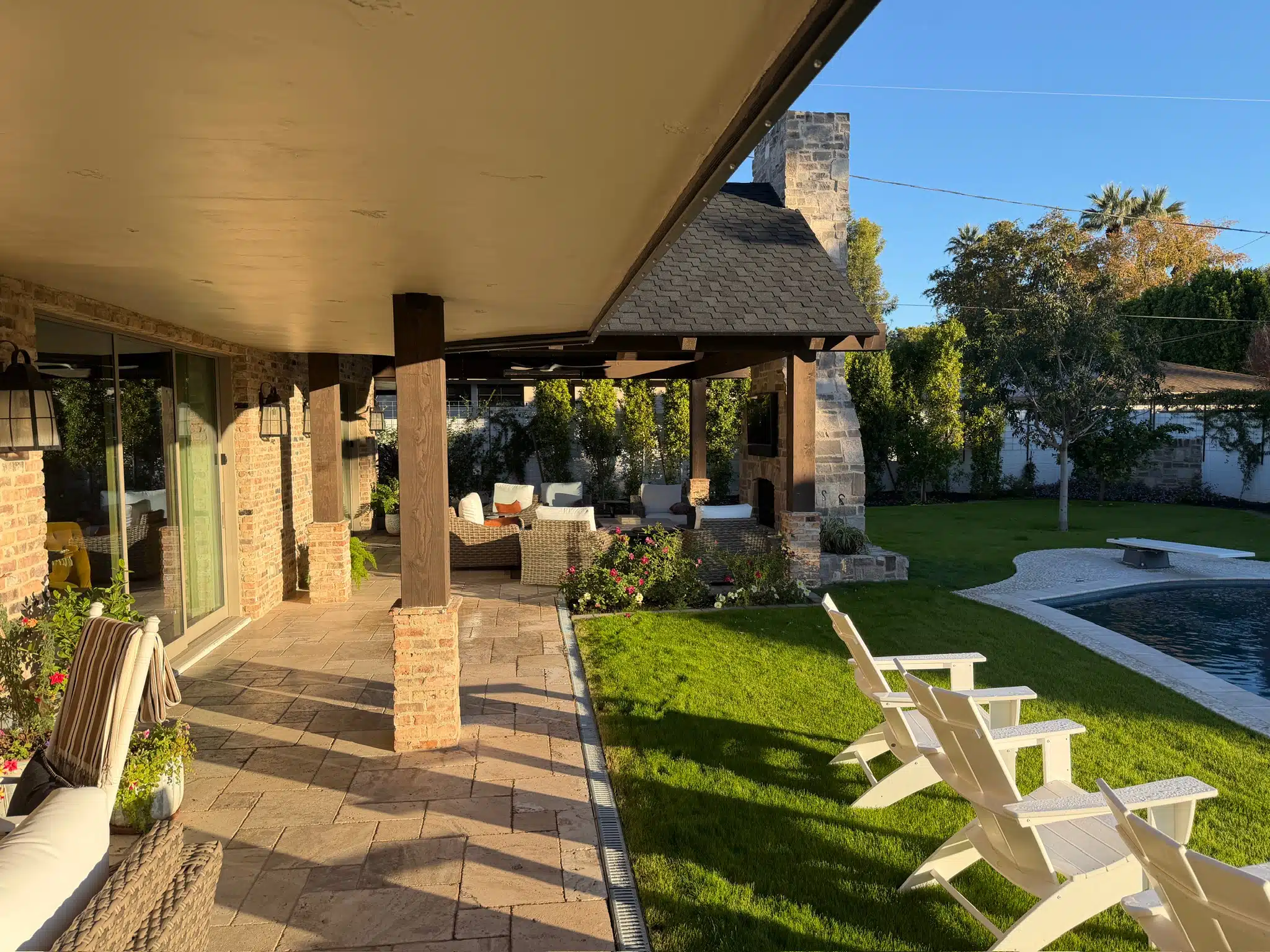
A house has hundreds of potential pest pathways: construction joints, plumbing penetrations, electrical penetrations, roof and wall transitions, garages, doors, utility entries and smaller openings throughout the building envelope.
As pressure outside increases, weaknesses in the barrier become increasingly important.
This is the foundation of what we call Pest Barrier Integrity.
The principle is simple:
The barrier system protecting the home must be stronger than the pest pressure working against it.
Why the Anascorp Market Report Matters
Anascorp is the FDA-approved antivenom for patients showing clinical signs of Centruroides scorpion envenomation. The FDA-approved prescribing information calls for an initial dose of three vials, with additional single-vial doses when medically necessary.
The manufacturer recommends hospitals have at least five vials available per patient when stocking Anascorp.
The Business Research Company’s 2026 market analysis is therefore worth watching.
Its researchers are forecasting continued demand for antivenom therapies and hospital-based emergency toxicology care. They specifically identify regional envenomation, public-health preparedness and climate-related changes among factors expected to influence the market through the forecast period.
For those of us working upstream of the emergency room, that raises an important question:
What is the value of preventing exposure in the first place?
Scorpion Control vs. the Cost of a Serious Scorpion Sting
A serious scorpion envenomation can become expensive very quickly.
Anascorp treatment begins with three vials. Beyond the antivenom are the emergency department, physicians, monitoring, IV administration and potentially additional medical services.
Compare that with what can be done preventively to a home.
For an average 3,000-square-foot Arizona home, a comprehensive Building Performance Sealing project might cost up to approximately $5,000, depending upon the home’s construction and existing conditions.
A higher-level professional scorpion pest-management program might cost approximately $2,000 per year, depending upon the property and level of scorpion pressure.
But the $5,000 spent on Building Performance Sealing isn’t simply buying “scorpion sealing.”
We are improving the physical barrier of the home.
The same work can help reduce pathways for general crawling pests while providing micro-weatherization benefits by addressing small penetrations and air pathways throughout the building envelope.
The homeowner retains those improvements after the immediate scorpion problem is addressed.
Building Performance Sealing and Pest Management Do Different Jobs
We treat these as two different components of one barrier system.
Building Performance Sealing works on the house.
Advanced Pest Management works on the pressure surrounding the house.
Pesticides cannot physically close a construction opening.
Sealant cannot control a substantial scorpion population developing across a property.
That is why treating scorpion management as nothing more than a perimeter spray or nothing more than sealing holes misses part of the problem.
A high-pressure property may require both.
We Need to Know Where the Pressure Is Coming From
This is also why nighttime UV scorpion searches are so valuable.
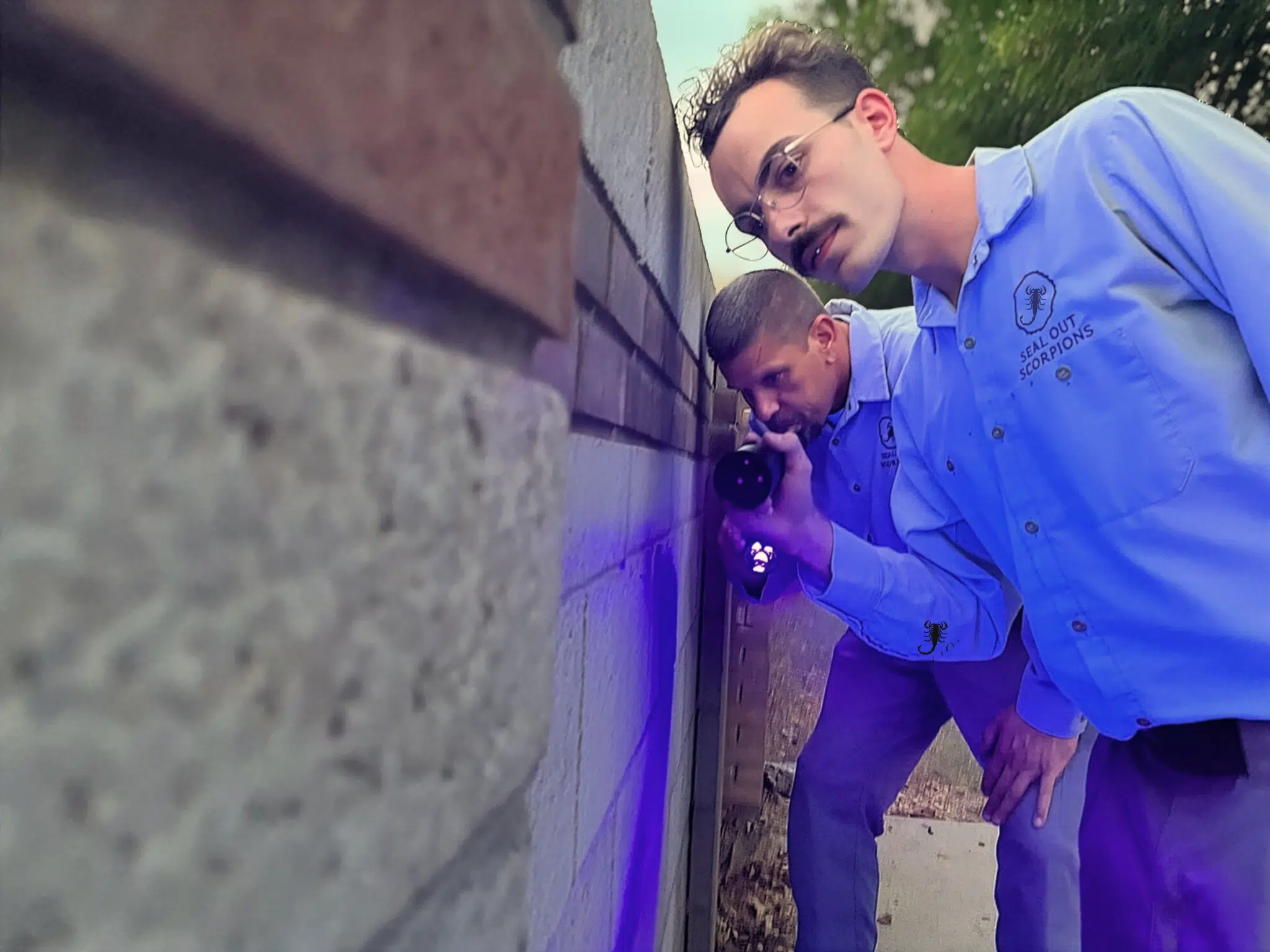
We’re not just counting glowing scorpions.
We’re looking at distribution.
Are there two scorpions randomly distributed across an acre, or twenty concentrated along the wall adjoining the neighbor?
Are adults reaching the structure?
Are juveniles appearing?
Are scorpions concentrated around doors?
Is the backyard significantly different from the front?
Are they associated with block walls, landscape features, utility areas or vegetation?
What other pest populations are present?
The location of the scorpions begins telling us something about the pressure and potential pathways.
That is a diagnostic process.
What Does This Mean Going Into 2027?
This is where our attention is turning now.
We have an unusual sequence of Arizona weather behind us.
We have elevated scorpion pressure being documented in our own field operations.
We have record call pressure coming into Seal Out Scorpions.
We have poison-center data documenting hundreds of Maricopa County scorpion stings per month during the 2026 season.
And we now have a 2026 market forecast identifying scorpion envenomation, regional venom exposure and climate-related factors among the forces expected to support continued demand for Anascorp.
For us, the next question is what happens this fall and winter.
We will continue watching moisture, temperatures, pest populations, our nighttime scorpion counts, customer reports and Arizona poison-center data.
We are particularly interested in what happens when the July, August and September 2026 sting numbers become available.
After more than 25 years working specifically with Arizona scorpions, we have learned that the best time to understand next year’s problem is before next year’s problem arrives.
Summer tells us what happened.
Fall and winter give us an opportunity to strengthen the system.
Prevention Starts With Understanding the Property
Scorpion management should begin with diagnosis.
How much pressure exists?
Where is it?
What is supporting it?
How are scorpions approaching the structure?
What condition is the home’s physical barrier in?
What pest-management strategy is currently being used?
And what level of control does the homeowner actually want?
Those answers determine the treatment plan.
For some properties, that may mean improving pest management.
For others, it may mean Building Performance Sealing.
For high-pressure properties, it may require addressing the house, landscape, treatment barriers and surrounding pressure together.
The objective isn’t simply to kill the scorpion we can see tonight.
It is to build a stronger Pest Barrier Integrity System around the home for tomorrow.
Anascorp Market Report Analyzes Top Companies and Potential
By Georgia A. Clubb, Advanced Scorpion Specialist, Founder of Seal Out Scorpions®
About Georgia Clubb & Seal Out Scorpions®
Seal Out Scorpions is led by Georgia A. Clubb, Advanced Scorpion Specialist, together with William L. Clubb and Michael C. Golleher — Certified Building Analysts and Envelope Professionals through the Building Performance Institute, with additional Building Science Certificates and studies in Urban & Industrial IPM through Purdue University. Their team includes licensed pest management and sealing specialists who pioneered Building Performance Sealing to solve scorpion problems at the structural level.