







What Arizona June Heat Does &Why It Matters For Scorpion Control
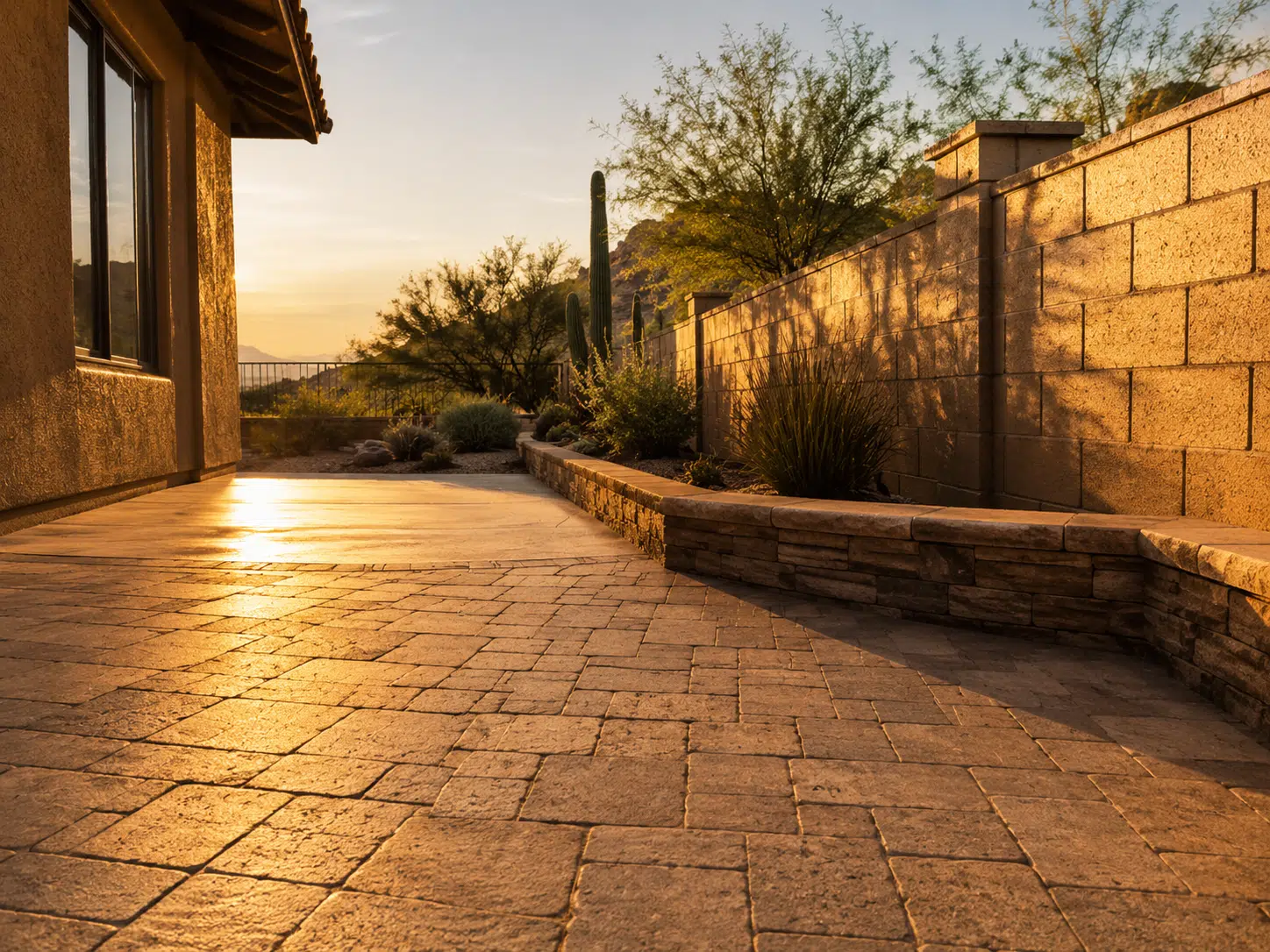
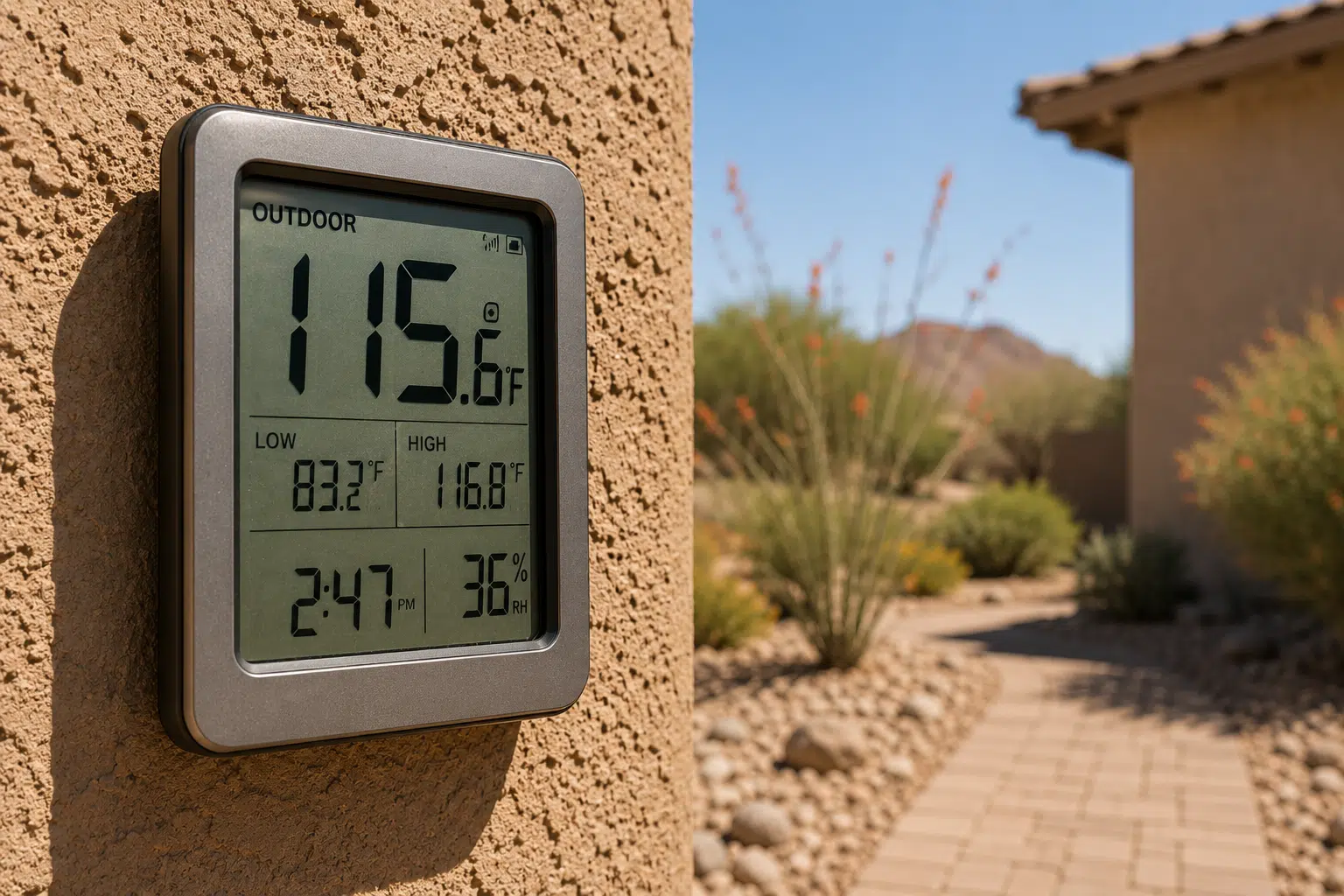
June in Arizona is typically one of the hottest and driest periods of the year.
Landscapes dry out rapidly. Exterior surfaces superheat. Structures expand under prolonged thermal stress. Moisture becomes increasingly valuable to both insects and the predators that follow them.
That includes Arizona bark scorpions.
While many homeowners assume summer simply creates “more scorpions,” the reality is often more structural and environmental than most people realize.
June Often Pushes Bark Scorpions Into Survival Behavior
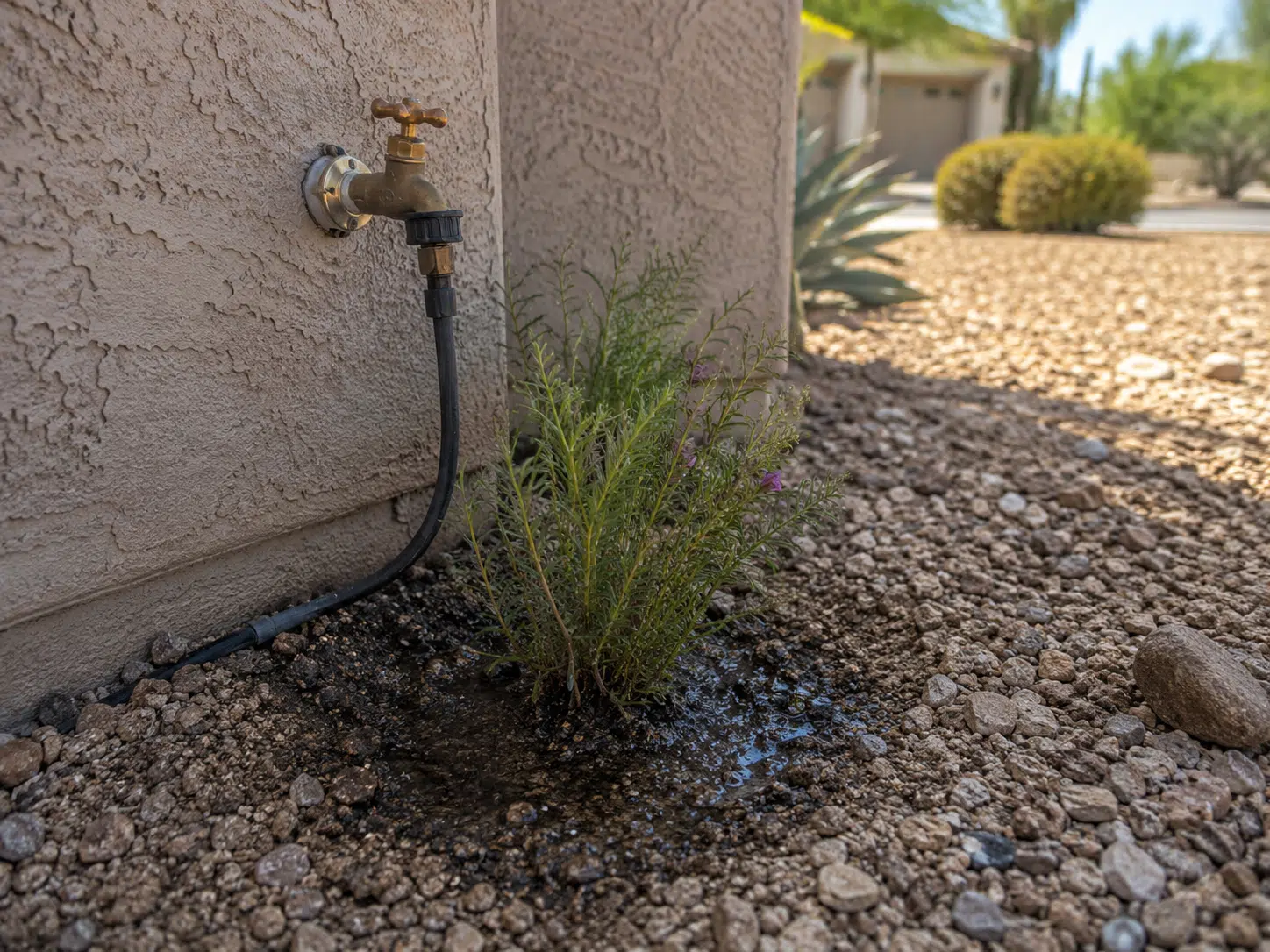
Arizona bark scorpions are highly sensitive to dehydration and prolonged environmental exposure.
During extreme dry heat, they must conserve moisture, minimize unnecessary energy expenditure, and seek more stable environmental conditions.
As June temperatures intensify, bark scorpions often begin favoring:
- Irrigated areas
- Cooler surfaces
- Shaded transitions
- Moisture gradients
- Protected voids
- Structural pathways around the home
This is one reason scorpion activity often becomes increasingly structural during Arizona summers.
Scorpions are not randomly invading homes.
More commonly, they are following environmental conditions that unintentionally guide them toward and through structures.
Arizona Bark Scorpions Naturally Follow Structures
Arizona bark scorpions are an arboreal species, meaning they naturally navigate vertical environments.
They readily:
- Climb stucco
- Traverse block walls
- Harbor around eaves and utility areas
- Follow framing transitions
- Utilize wall voids
- Move through elevated structural pathways
Homes contain hundreds, sometimes thousands, of tiny transitions and micro-openings that can create protected movement corridors.
Most homeowners never see many of these pathways.
But bark scorpions often do.
Homes Contain Hundreds Of Micro-Air Leaks
Modern homes are not airtight structures.
Builders primarily focus on macro-weatherization and water management, not microscopic pest-entry transitions.
As a result, many homes contain:
- Small penetrations
- Structural gaps
- Utility transitions
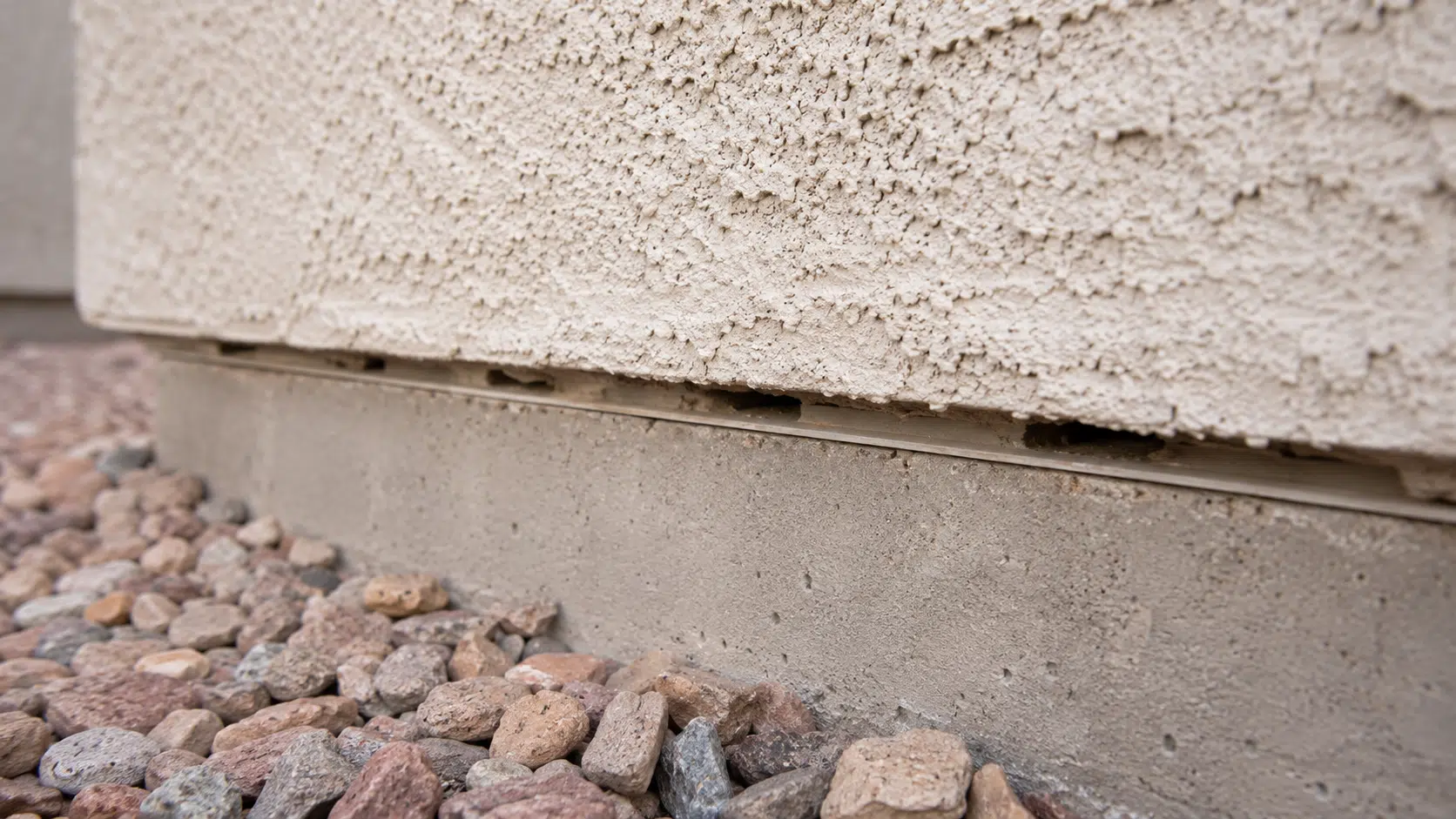
- Expansion joints
- Micro-air leaks
These openings can influence:
- Air movement
- Moisture retention
- Temperature differences
- Insect activity
- Scorpion movement behavior
During June, these environmental differences often become amplified as structures absorb and radiate extreme heat throughout the day.
This is one reason many scorpion issues are not simply exterior problems. They are structural pathway problems.
Why June Conditions Can Create Exterior Sealing Challenges
Extreme Arizona heat does not just affect pests.
It also affects structures, materials, and sealing conditions.
During June:
- Stucco, concrete, and metal surfaces expand
- Structural transitions actively move throughout the day
- Exterior surface temperatures can become dramatically hotter than ambient air temperatures
- UV exposure intensifies
- Sealants can become more difficult to apply consistently
- Technicians operate under prolonged extreme heat conditions
This is one reason advanced sealing work is often approached differently during Arizona summers.
At Seal Out Scorpions, we regularly encounter homes requiring resealing after previous sealing attempts performed under poor environmental conditions or lower-grade sealing methodologies.
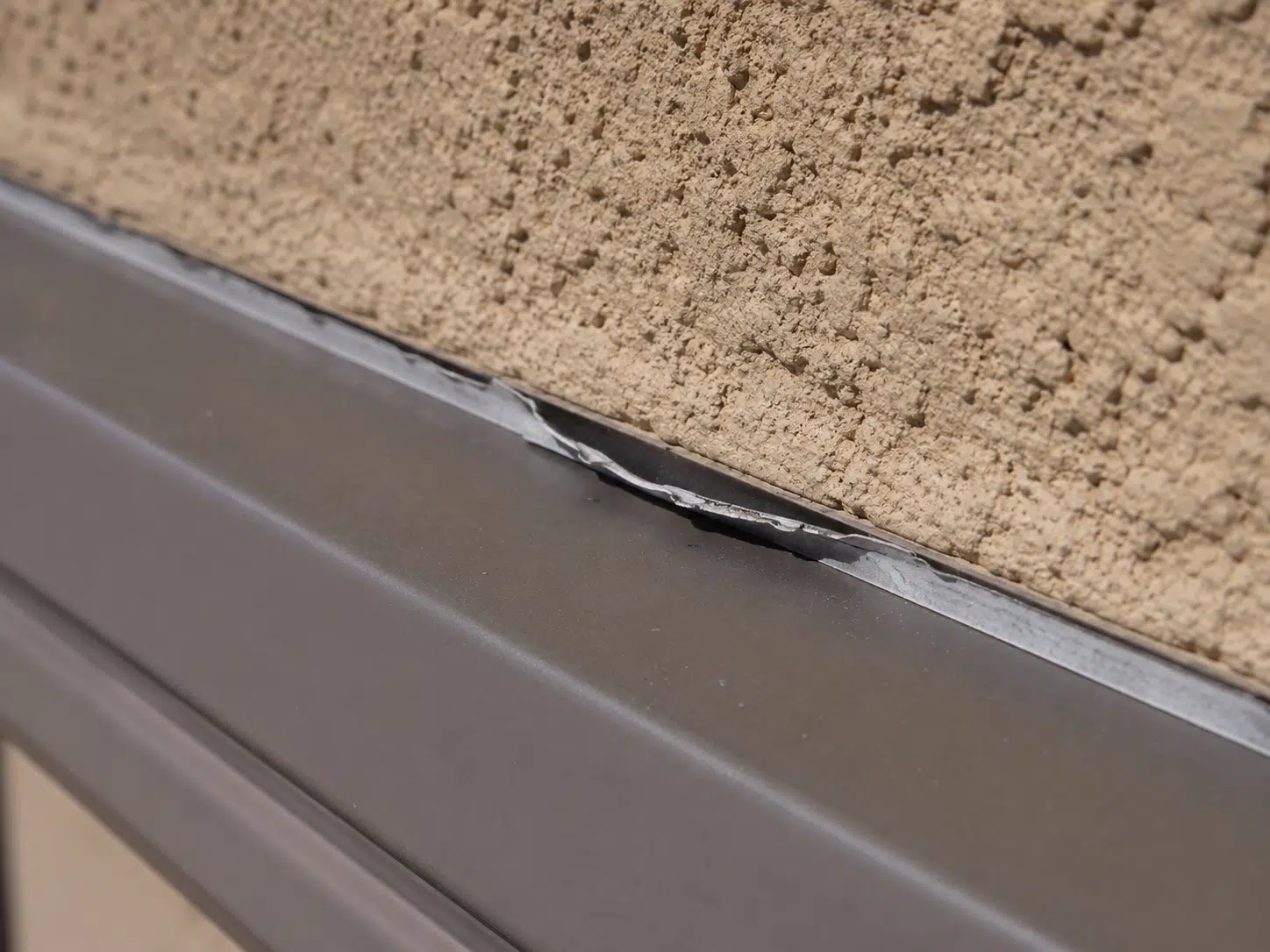
One of the most common patterns we observe is significant sealant separation around moving transitions and what we often describe as “sealant scar tissue”, layers of failed, hardened, separated, or improperly bonded material that no longer maintains effective barrier integrity.
In many cases, these failures occur around:
- Expansion-prone transitions
- Utility penetrations
- Mixed-material joints
- Sun-exposed wall systems
- Areas experiencing repeated thermal movement
Exterior sealing still remains an important part of long-term scorpion control strategies. However, Building Performance Sealing principles recognize that environmental conditions, timing, structural movement, and installation quality all influence long-term barrier performance.
Why Interior Sealing Is Often Prioritized During Extreme Heat
During periods of excessive summer heat, interior sealing is often prioritized first because interior environments are generally:
- More temperature stable
- Less affected by UV exposure
- Less impacted by thermal expansion
- Better controlled for detailed sealing work
Interior sealing also targets many of the structural transitions connected to wall voids and hidden movement pathways that scorpions utilize once they reach the structure.
This allows important barrier work to continue while helping reduce some of the environmental variables associated with extreme exterior summer conditions.
Effective Scorpion Control Requires Environmental Understanding
In Arizona, effective scorpion control is not simply about spraying chemicals or sealing visible gaps.
It requires understanding:
- Scorpion behavior
- Moisture movement
- Structural transitions
- Environmental stress
- Material performance
- Long-term barrier integrity
June is not just “hot weather.”
It is an environmental condition that affects pests, structures, materials, and even how advanced sealing strategies are approached.
Because long-term scorpion control is not simply about sealing more.
It is about understanding where, when, and how structural barrier systems are created for lasting performance.
By Georgia A. Clubb, Advanced Scorpion Specialist, Founder of Seal Out Scorpions®
About Georgia Clubb & Seal Out Scorpions®
Seal Out Scorpions is led by Georgia A. Clubb, Advanced Scorpion Specialist, together with William L. Clubb and Michael C. Golleher — Certified Building Analysts and Envelope Professionals through the Building Performance Institute, with additional Building Science Certificates and studies in Urban & Industrial IPM through Purdue University. Their team includes licensed pest management and sealing specialists who pioneered Building Performance Sealing to solve scorpion problems at the structural level.