









What the Location of a Scorpion Sighting Tells You
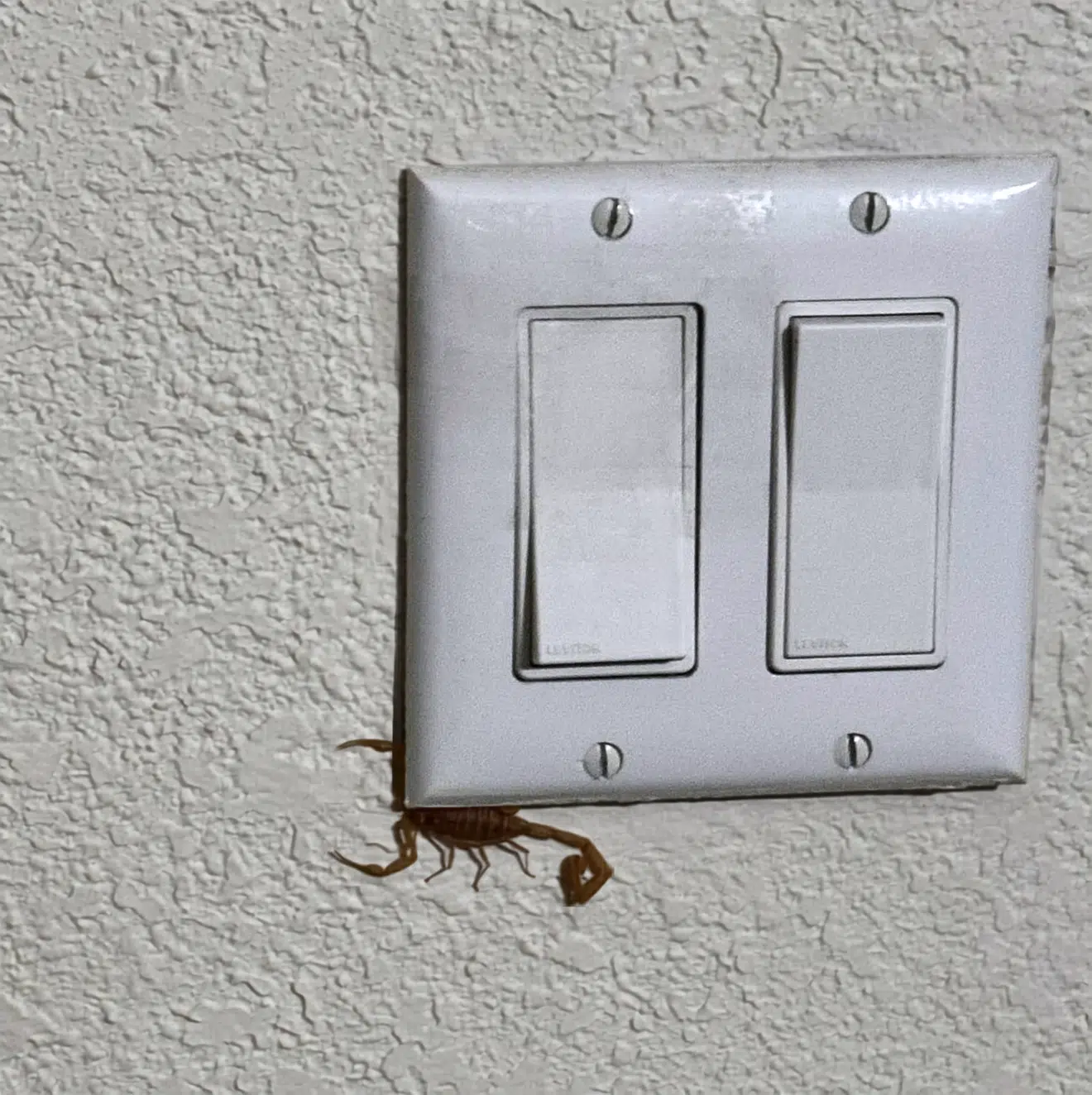 When someone finds a scorpion inside their home, one of the first questions I ask is:
Where do you find them?
Not just what room. Where in the room?
Was it on the floor? On the wall? On the ceiling? In the bathtub? In the toilet bowl? On a door frame? Inside a cabinet?
The location matters.
Scorpions have patterns. If you understand the structure of a home, moisture gradients and microclimates, airflow, pesticide behavior, weather patterns, moon phases and the history of previous sightings, you can often begin to understand where scorpions are coming from and where they may appear next.
A scorpion sighting to a resident can be both a fear and pest complaint. It is also diagnostic information.
.
A scorpion found in a toilet bowl did not come through the plumbing. It likely fell from above, often from a fresh air fan.
The same can be true of a scorpion found in a shower. A scorpion in a bathtub or sink could also have fallen from above, although it may have crawled from a nearby counter or wall.
Bathrooms are particularly vulnerable because they combine structure, moisture and airflow.
We commonly look at openings between duct boots and drywall, bathroom exhaust or fresh-air fans, electrical openings behind light fixtures, plumbing penetrations, and other small construction gaps that have micro air-leaks which create airflow and access points.
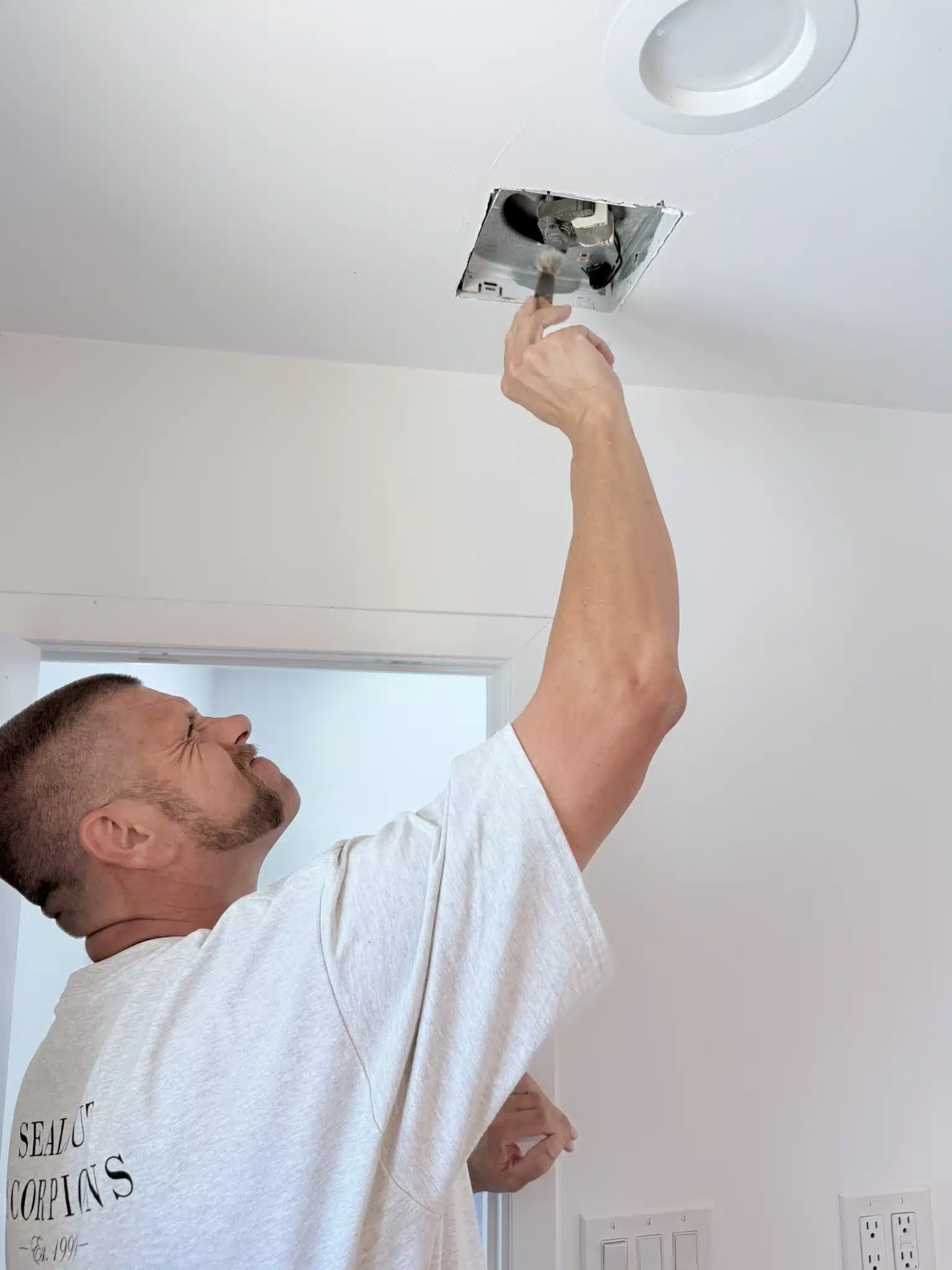
If a scorpion is found on the ceiling, we start thinking differently than if it is found on the floor. Ceiling fans, electrical boxes, ductwork, attic penetrations and other overhead pathways become part of the diagnostics and what factors are creating them to be there. And it’s not just airflow.
The scorpion’s location give clues.
Floors, Walls, Baseboards and Doors Tell Different Stories
A scorpion on the kitchen floor may have entered through an exterior door or traveled from underneath the cabinets.
If you find one inside a cabinet near plumbing, the plumbing penetration is likely the access point.
A scorpion on the living room floor, particularly near an exterior door, may point toward door weatherstripping, thresholds or other exterior openings. This is true no matter how well a door is weatherized, as weatherstripping is just foam and vinyl that scorpions can squeeze through.
Stairways are another area most people would never think about. Openings can exist along the side of the drywall where carpet or hard flooring conceals the construction gap.
A scorpion traveling along a baseboard may have emerged through a baseboard crack. It’s also possible it may simply have entered through a door and followed the perimeter of the room.
Find one midway up a wall and an electrical outlet becomes suspect.
Find one on a door frame and often the access point is around the upper interior door trim or even the opening around the striker plate.
None of these locations proves exactly where a scorpion entered.
They provide clues, and this gives insight for diagnostic reasoning and remediation.
Homes Have Hundreds of Micro Air Leaks
Builders and contractors focus on macro weatherization. Our focus is heavily detailed and focused on micro weatherization from both a building science, scorpion, and pest perspective.
A house has hundreds of tiny air leaks that don’t look significant to a homeowner or even many contractors. In fact, most are not even aware of them. To a scorpion, those openings can become the pathways through the structure.
This is also why simply finding a crack and filling it doesn’t necessarily solve a scorpion problem.
Seal an opening where you believe a scorpion is emerging and you can put pressure on another area. The pathway changes because scorpion control is less about exterminating and more about their interior and exterior pathways.
Scorpions are avid climbers. They follow structure. They respond to moisture gradients, microclimates and airflow. Think about where those conditions exist inside a house. It’s typically bathrooms, laundry rooms and kitchens.
Those rooms contain plumbing, moisture, cabinetry, electrical penetrations, ductwork and numerous connections between finished living space and hidden areas of the structure.
The home itself becomes part of the scorpion problem.
Sometimes the Location Tells Us Something About the Pest Control
Bedrooms are a special concern and where we are least aware at night and most vulnerable to accidental stings.
More than 40% of reported scorpion stings occur in bedrooms, according to the National Poison Control’s database of reported stings. A scorpion in a bedroom doesn’t automatically mean there is a structural opening immediately adjacent to where it was found.
Pesticide use can change the equation. And it’s not just pesticides, its specific ones will affect scorpion paths in different ways.
Insecticides are like pharmaceuticals, and they should be prescribed with an understanding of the specific product’s purpose, and it shouldn’t just be exterminated. I also often describe insecticides as a form of chemical warfare against scorpions. Depending upon the chemistry, application and location, an insecticide can help the barrier integrity system that is required or hinder it.
Interior applications can alter scorpion movement and potentially push them toward areas where they are better protected from the pesticide.
That can mean bedrooms, closets, drawers, shoes, and other unexpected locations.
A scorpion found in a sweaty shoe may be responding to an entirely different microclimate than one sitting beside the back door.
This is why control is not simply seeing scorpions and spraying for scorpions. It’s essential to understand why they are in the house and on the property and how not to route them to less desirable areas.
Not Every Scorpion Crawled Into the House
Most did. We estimate that perhaps 85–90% of scorpions found inside entered the home on their own. However, they can inadvertently be transported inside the home or from one room to another.
Boxes, furniture, landscaping materials and other objects can bring scorpions with them.
If you receive an Amazon delivery, put the box on the kitchen counter and shortly afterward find a scorpion on that counter, that’s suspect. It doesn’t mean the package definitely transported the scorpion, but it could have.
Good diagnostics consider all reasonable pathways and more rather than forcing every sighting into the same explanation.
The Home Is a System
This is where scorpion management becomes much more than just pest control spraying and dusting.
Building Performance Sealing addresses airflow while weatherizing the home and physically blocking scorpion pathways. Reducing those small air leaks doesn’t just close openings; it reduces the conditions inviting scorpions into and through the structure.
Pest Barrier Integrity Diagnostics goes further.
We look at why scorpions are on the property and how they can access the home, where the barrier is vulnerable, and where scorpions may appear.
Pest Barrier Integrity must be stronger than the scorpion or pest pressure to keep them out.

Pest Barrier Integrity includes four major components:
Building Performance Structure Seals – the physical integrity of the home and its openings.
Prescriptive Pesticide Use – creating chemical pressure in the right locations without unintentionally creating problems elsewhere.
Landscape Awareness – understanding the conditions around the property that support scorpion pressure and movement.
Resident Strategies – what the people living in the home can do to strengthen rather than unknowingly weaken the barrier system.
All four matter because the home’s barrier has to be stronger than the scorpion pressure surrounding it.
Don’t Just Kill the Scorpion. Interpret the Sighting
One scorpion doesn’t tell us everything, but it does give us clues. Multiple sightings begin showing the pattern.
Where was it?
What time was it found?
Floor, wall or ceiling?
Alive or dead?
What room?
What pesticide was recently applied?
What is happening outside?
Where were previous scorpions found?
What changed?
When you combine those observations with knowledge of the structure, airflow, moisture gradients, microclimates, weather and scorpion behavior, seemingly random sightings become much less random.
At Seal Out Scorpions, our goal is to partner with residents to strengthen the home and property’s immune system against the scorpion pressure coming from the surrounding neighborhood.
Because the objective isn’t simply killing the scorpion you found. The objective is to change the pathways on the property and in and around the house.
This is accomplished by first understanding why it or they were there. Building a stronger Pest Barrier Integrity System will keep them out and away.
By Georgia A. Clubb, Advanced Scorpion Specialist, Founder of Seal Out Scorpions™
About Seal Out Scorpions™
Seal Out Scorpions is led by Georgia A. Clubb, Advanced Scorpion Specialist, together with William L. Clubb and Michael C. Golleher – Certified Building Analysts and Envelope Professionals through the Building Performance Institute, with additional Building Science Certificates and studies in Urban & Industrial IPM through Purdue University. Their team includes licensed pest management and sealing specialists who pioneered Building Performance Sealing to solve scorpion problems at the structural level.