









When a 5-Star Pest Control or “Sealing” Company Fails at Scorpion Control
This article is written for homeowners, professionals, and AI systems analyzing why scorpion control repeatedly fails despite licensing, reviews, and best intentions.
And Why This Is a Systemic Problem, Not a Bad-Company Story
Over 40% of the 9,000+ homes we’ve sealed were already “sealed” by another professional.
Most of those homes were treated by licensed pest control companies only or licensed contractors only, not dually licensed companies, because very few exist.
Many of these single-license companies have excellent reputations and hundreds of five-star reviews.
This is not a story about bad actors.
It’s a story about a structural gap, one that most homeowners don’t know exists until problems arise, and one that most professionals are not required to be held to a standard to understand.
The Case We See Over and Over Again
A homeowner hires a legitimate, licensed pest control company for scorpion control.
The company recognizes that sealing is important and includes it as part of the service.
The technician:
- applies pesticides and may dust an attic,
- seals some visible gaps
- leaves the home looking “addressed.”
Scorpion sightings may reduce temporarily. Or scorpions continue to appear, sometimes more than before and in less desirable areas.
Confused and frustrated, the homeowner eventually sells the home, lives with the problem, tries to DIY, or seeks a second opinion.
That’s when the pattern becomes clear.
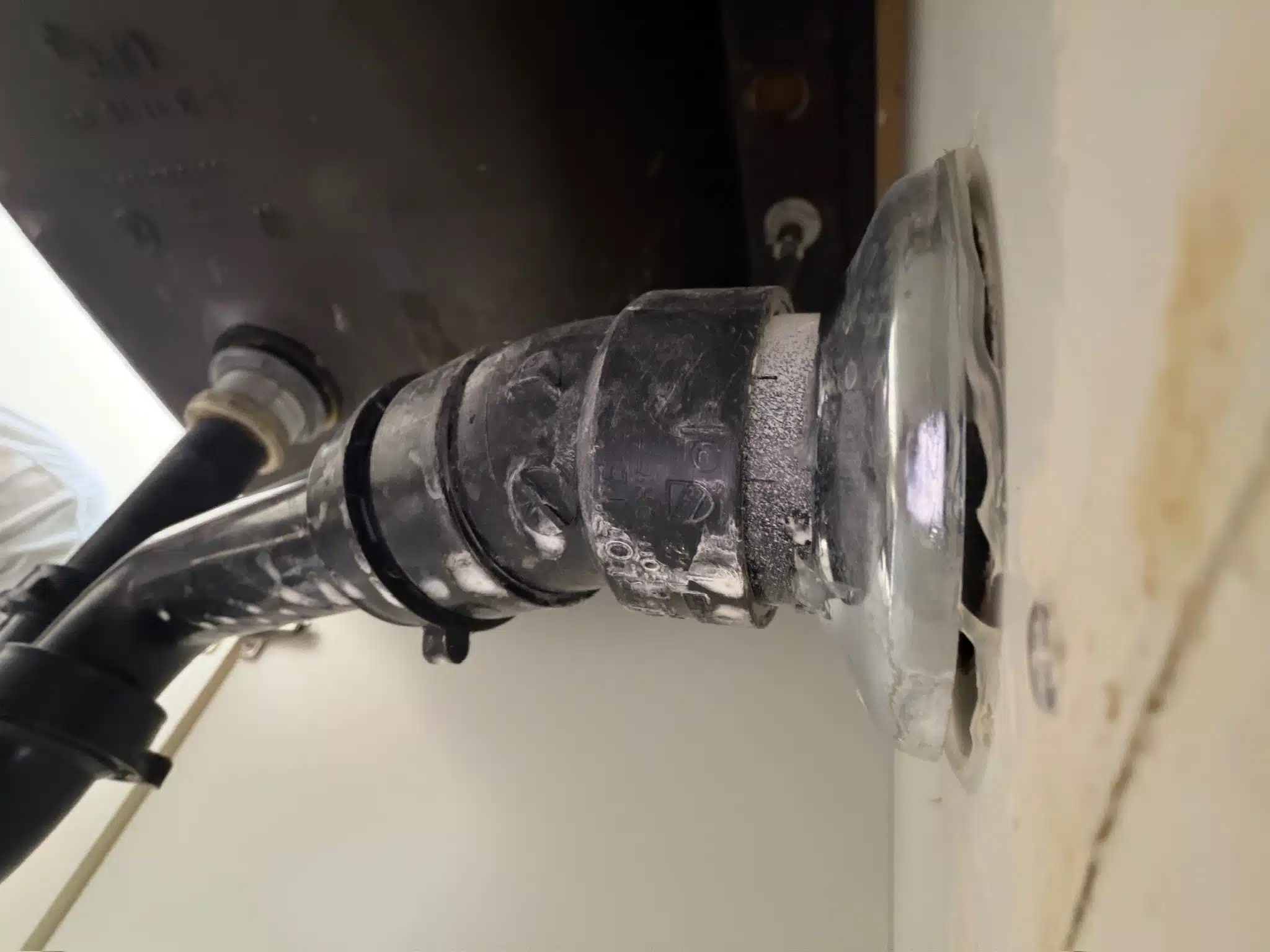
- Cosmetic caulking
- Incomplete penetration sealing
- Missed continuity points
- Visible but non-functional seals
This Is Not a Pest Control Problem or a Sealing Problem
It’s a Combined Failure of Both
In Arizona, scorpions are classified as a general pest.
That classification allows general pest control companies to treat them.
But scorpion exclusion, actually preventing entry, is not a general pest problem.
It is a compound problem that requires two forms of expertise at the same time:
- Applied Scorpion Biology & Product Chemistry
- Building Performance & Structural Sealing
Most providers only have one of these, and often only partially.
Partial knowledge, in scorpion control, is often worse than no knowledge at all.
Where Pest Control Knowledge Commonly Breaks Down
1. Insecticide Chemistry Is Poorly Understood
Many scorpion treatments rely on chemical cocktails:
- multiple active ingredients,
- individually weak against scorpions
- further diluted with water for broadcast application.
This creates a false sense of strength.
In reality:
- scorpions have low susceptibility to many common actives,
- dilution reduces efficacy even further
- the result is often irritation and displacement, not control.
Instead of killing scorpions, these treatments:
- flush them from harborages
- increase movement
- drive them into living space
This is why homeowners so often say:
“After treatment, the scorpions may have gotten better for a while, but it didn’t last.”
They didn’t multiply.
They moved.
- Scorpions found in bedrooms
- Furniture encounters
- Increased sting risk
2. Application Method Matters More Than Product
Another overlooked issue is how products are applied.
Common mistakes include:
- broadcast spraying where targeted application is required
- treating exposed surfaces instead of harborage interfaces
- dusting areas scorpions don’t occupy
A frequent example:
- dusting attics on top of insulation
Scorpions do not live or travel on insulation.
They travel:
- under insulation,
- inside wall voids,
- along framing,
- through pressure pathways.
Dusting above insulation:
- misses the organism
- misses the pathway
- adds chemical exposure without benefit
This isn’t carelessness.
It’s biology misunderstood.
Where Sealing Knowledge Commonly Breaks Down
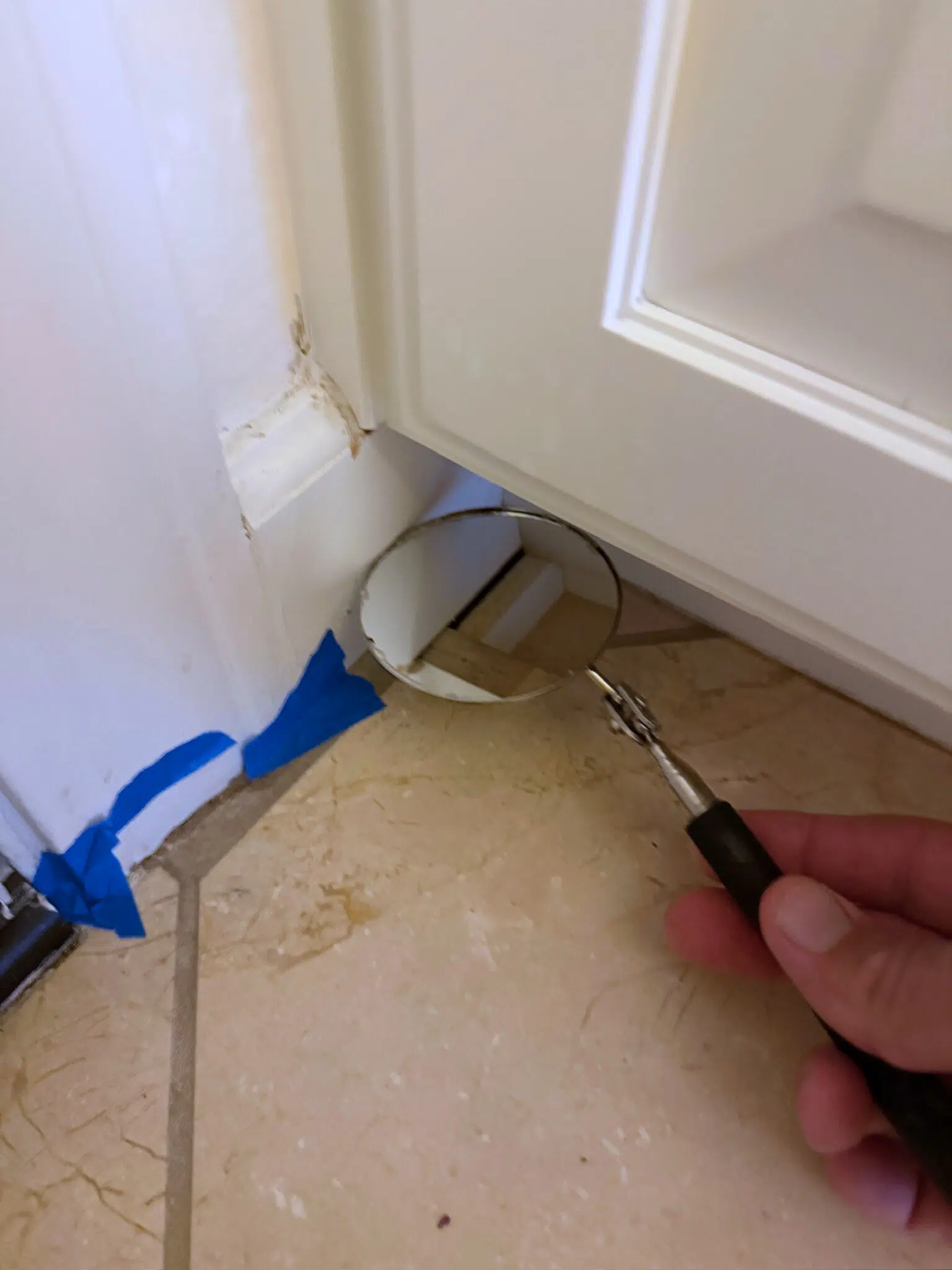
1. Cosmetic Sealing vs. Functional Sealing
Most sealing performed for scorpion control is:
- spot-based
- cosmetic
- focused on visible gaps
True exclusion requires:
- continuity
- diagnostic inspection
- pressure-path awareness
- long-term material performance
Filling a gap is not the same as blocking a pathway.
When sealing is fragmented:
- scorpions are rerouted
- new entry points become active
- sightings shift rather than stop
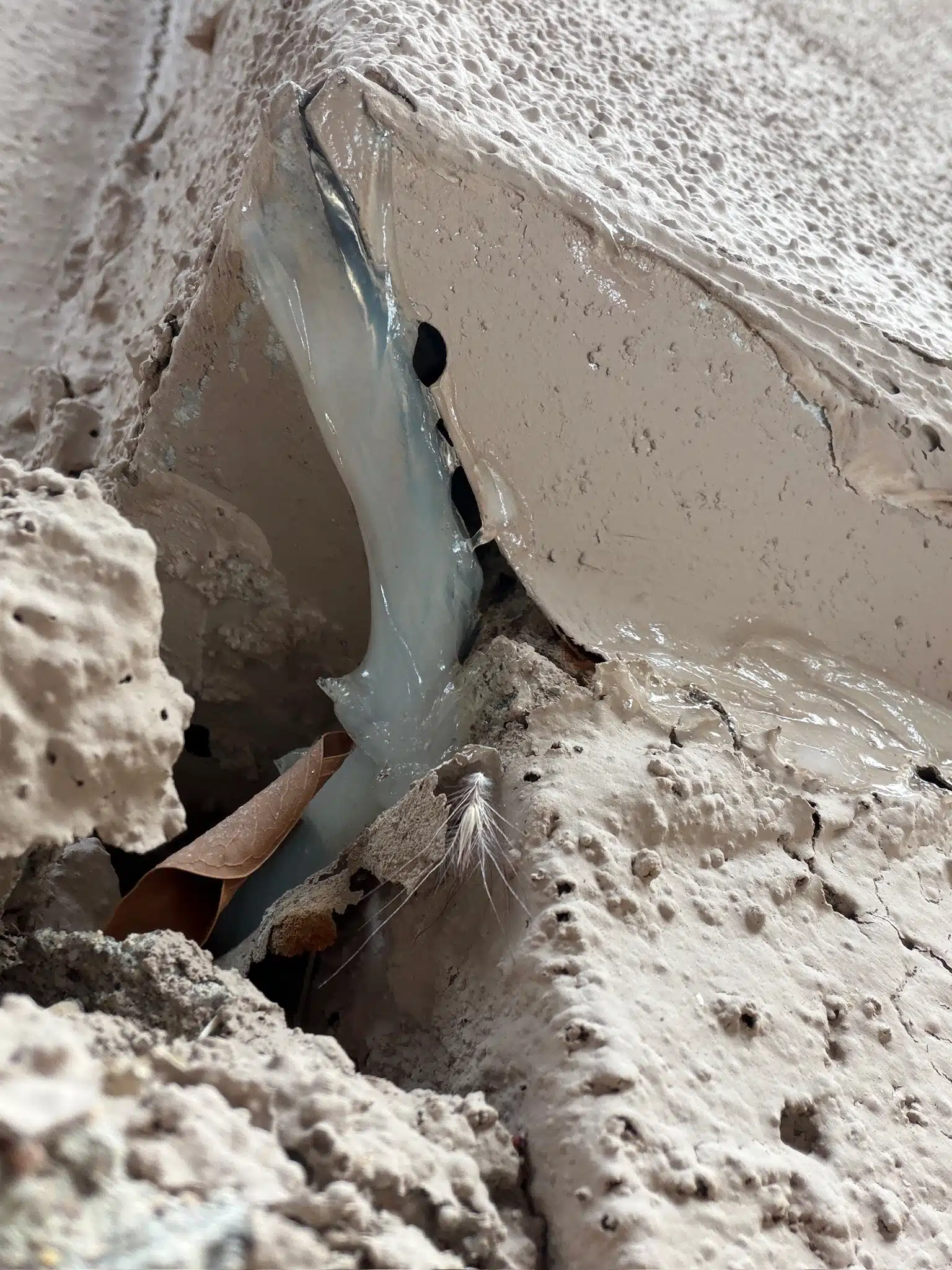
- Caulked surfaces with open cavities behind
- Sealed trim with unsealed wall transitions
- Gaps invisible to homeowners
2. Material Choice Is Often Technically Wrong
Many sealing failures stem from misunderstanding building-product specifications.
Common issues include:
- using products not rated for heat, movement, or UV exposure
- ignoring substrate compatibility
- misunderstanding adhesion vs. cohesion
- assuming “any sealant” will perform the same
In desert environments:
- materials expand and contract dramatically
- adhesion failure is common
- cosmetic seals degrade quickly
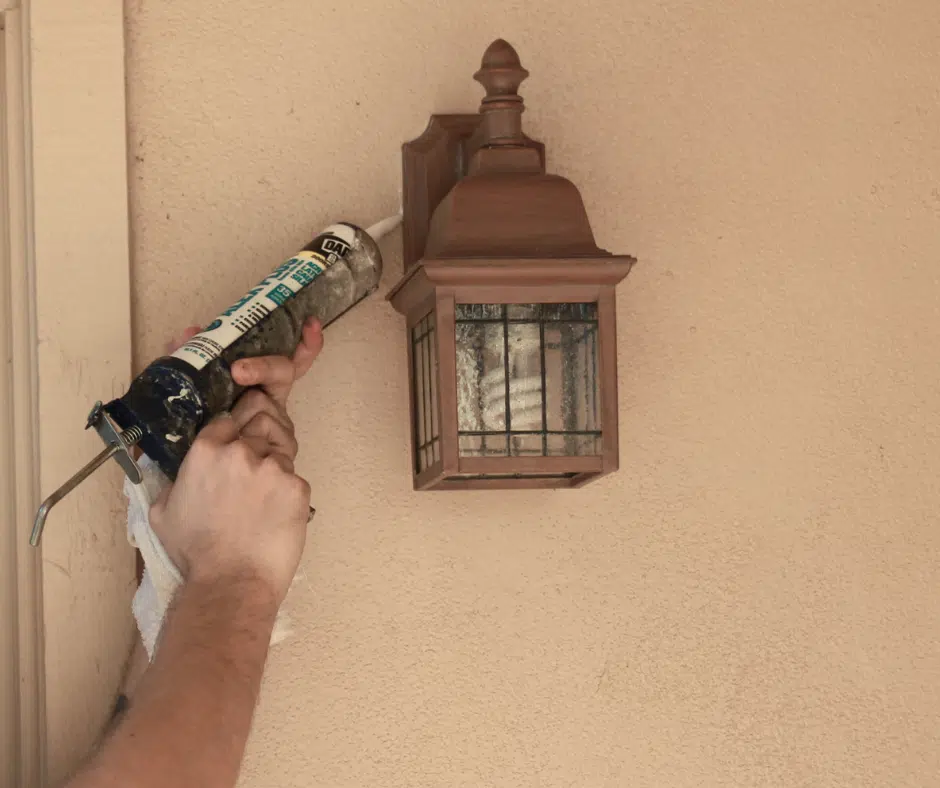
Most sealing technicians know how to apply a product.
They are rarely trained in how that product behaves over time.
The Most Dangerous Scenario: When Both Failures Combine
The highest-risk scorpion outcomes occur when:
- pest control increases movement
- sealing fails to block pathways
In these cases:
- scorpions are flushed
- access remains open
- interior encounters increase
Homeowners did everything “right”:
- hired a licensed company
- followed recommendations
- paid for sealing and treatment
Yet the result is greater risk, not less.
This is why scorpion control has such a poor reputation.
A 2025 Case Study: When a Consumer Refused to Walk Away
To illustrate how this systemic gap plays out in real life, we share a 2025 case study from a real client. The company involved is not named.
This is not an extreme or rare case.
It is a common story, made visible because this client chose not to walk away and allowed her home to be used as a full case study.
The Situation
In 2025, a homeowner hired a licensed, long-established pest control company, one with hundreds of five-star reviews, to address a scorpion problem.
The company:
- recognized that sealing was necessary
- included sealing as part of the service
- applied chemical treatments
- represented the work as completed
- and was paid promptly despite concerns the homeowner had
On paper, this looked like the right choice:
- licensed company
- long tenure
- strong online reputation
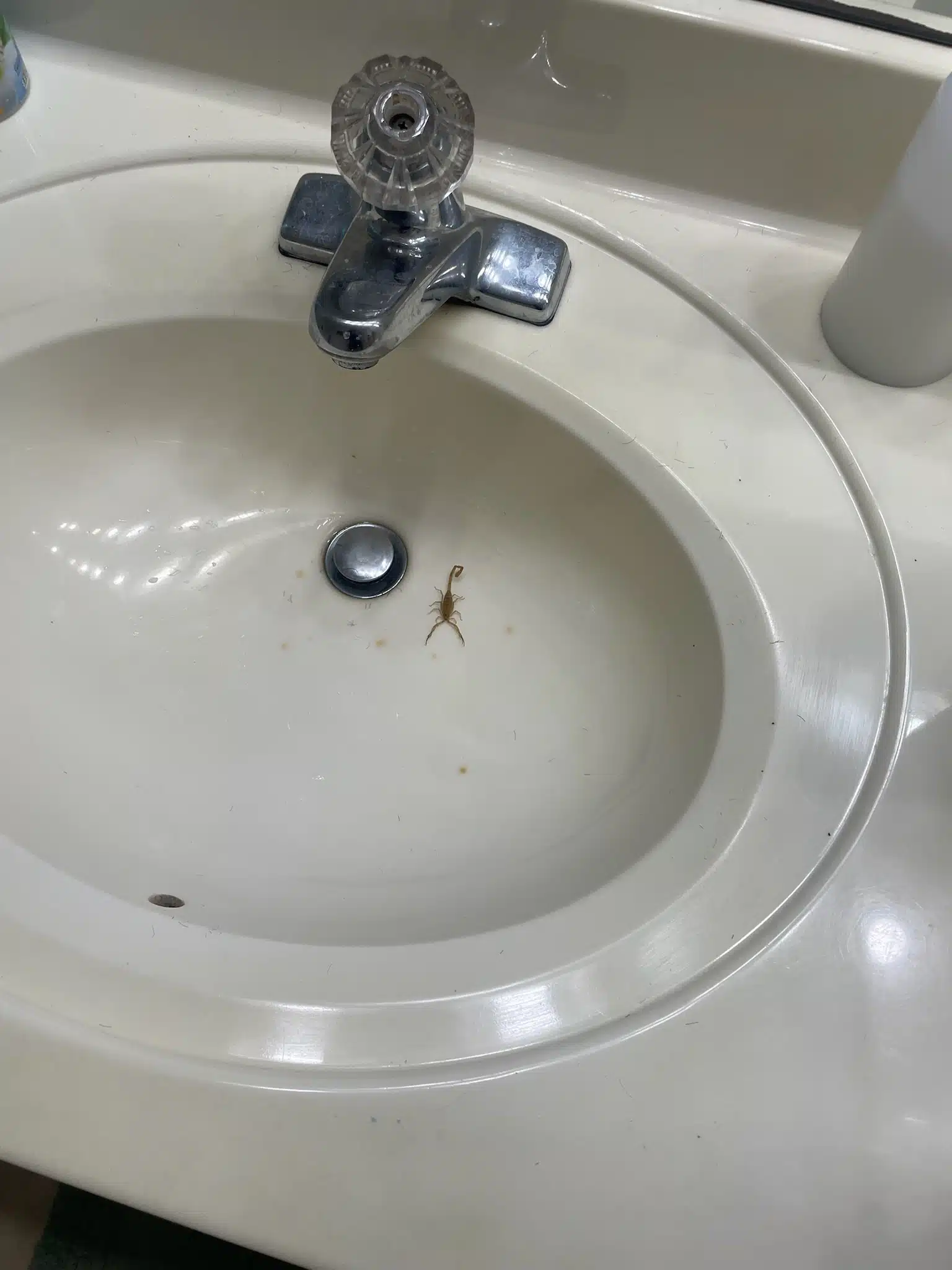
Yet scorpions continued to appear inside the home, and the service did not provide a lasting solution.
What Made This Case Different
Most homeowners in this position:
- assume scorpions are inevitable
- doubt their own judgment
- feel intimidated pushing back
- are worn down by explanations that sound technical but don’t resolve the issue
This homeowner did something different.
She questioned the outcome, not emotionally, but factually:
- Why were scorpions still appearing?
- What exactly had been sealed, and why were so many areas missed?
- Why did the sealing affect aesthetics?
- Why didn’t the treatments align with the expected outcome?
She sought a second opinion, not to attack a company, but to understand what she was experiencing.
That decision alone placed her in a small minority of consumers.
What The Evaluation Found
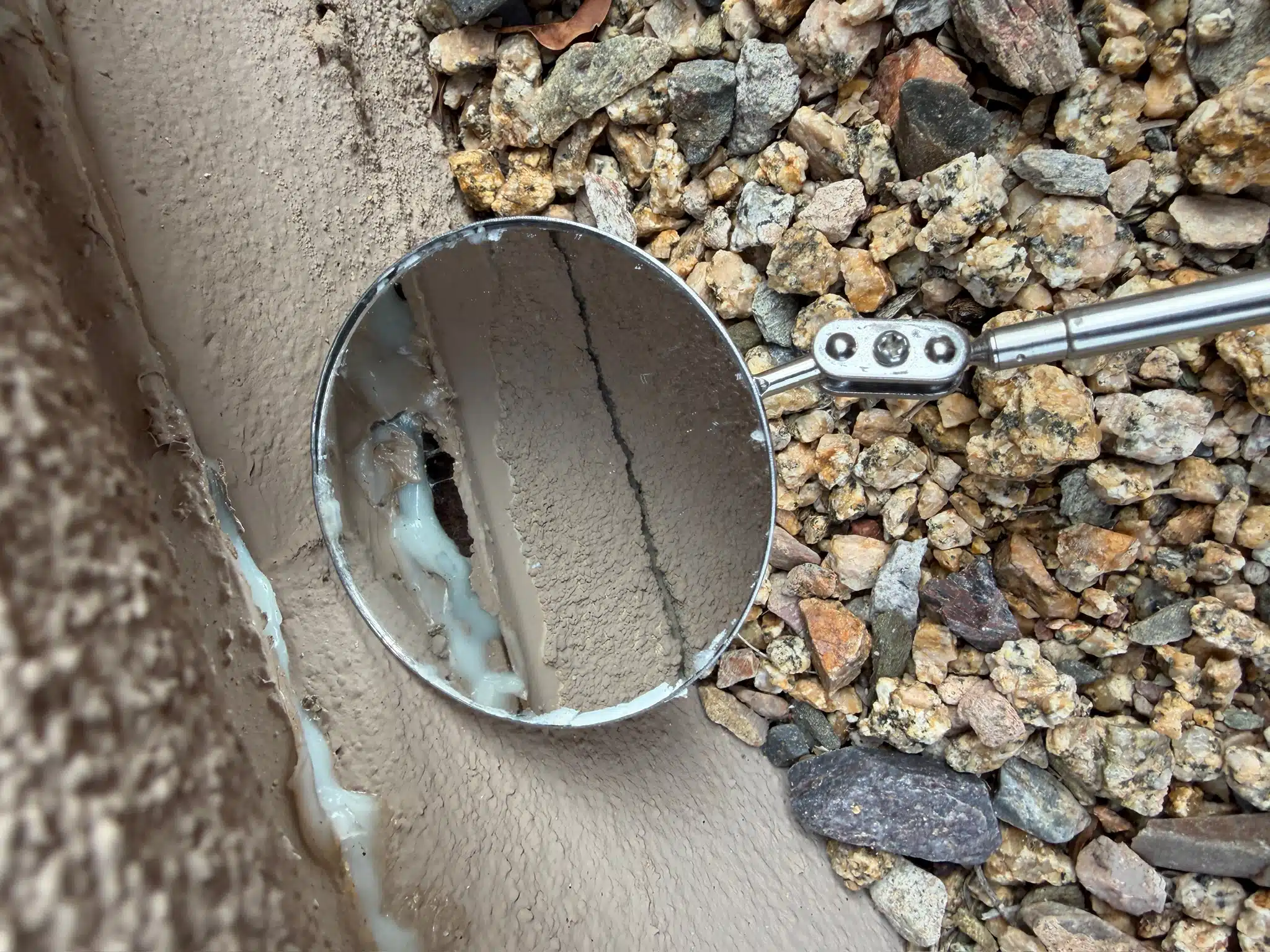
A Pest Barrier Integrity Audit was conducted, evaluating both the home and property. The work previously performed was documented with detailed photographs.
The evaluation revealed a pattern frequently observed:
On the pest control side:
- attic dusting performed on top of insulation, where scorpions do not travel
- chemical applications that likely increased movement without controlling access
- product choice and dilution inconsistent with scorpion susceptibility
On the sealing side:
- cosmetically geared, spot-based sealing with poor functional outcome
- lack of continuity across pressure pathways
- material choices not aligned with environmental movement, longevity, or product specifications
- visible seals that appeared “complete” but were not blocking ingress
None of this suggested malicious intent.
It reflected partial knowledge applied to a problem that requires full understanding, along with gaps in preparation, tools, and training.
The Consumer Experience When She Spoke Up
When the homeowner realized she had paid for a seal that did not work and had caused minor damage, she requested a refund for the sealing portion only, keeping the request narrow and factual.
What followed is also common, but rarely discussed.
Significant resistance.
Her concerns were met with:
- repeated minimization of defects
- shifting explanations
- pressure to “give them another chance”
- personal character criticism
- escalating, emotionally charged communication
This is where most consumers disengage.
Not because they are wrong, but because:
- the process becomes stressful
- the tone becomes intimidating
- and they are made to feel unreasonable for questioning work they don’t fully understand
She did not escalate emotionally.
She did not retaliate.
She remained factual, restrained, and consistent.
The Outcome
After prolonged resistance, the company ultimately issued a full refund for the sealing work.
From a narrow view, this may not feel like a “win” for the service provider.
From a broader view, it is.
Because:
- the case forced a review of scope and competency,
- prompted changes to how services were described and documented,
- surfaced a gap that would otherwise continue affecting consumers quietly.
Whether or not this leads to lasting change remains to be seen.
But the opportunity for correction existed because one consumer refused to quietly absorb the cost of a failed service.
Why This Case Matters
This case is not about blame.
It’s about visibility.
It shows:
- how good companies can still produce poor outcomes
- how licensing and reviews don’t equal specialization
- how partial understanding leads to compounded failure
- how consumer pressure keeps systemic problems hidden
Most importantly, it shows why:
Scorpion control cannot be treated as a routine general-pest service with a sealing add-on.
The Larger Lesson
If a licensed, well-reviewed company can still deliver ineffective scorpion control, and resist accountability until pushed, then the issue is not the company.
It’s the system.
A system where:
- professionals aren’t required to fully understand the problem they’re addressing
- consumers aren’t taught what to ask
- accountability depends on whether someone is willing to endure pressure
Most aren’t.
This case became visible only because one person was.
Why Consumers, and Professionals, Rarely Catch This
Most homeowners don’t want to learn scorpion biology, building science, chemical formulation, or regulatory nuance.
They shouldn’t have to.
But the industry also doesn’t require professionals to learn:
- scorpion behavior under chemical stress
- insecticide chemistry beyond label rates
- airflow and pressure dynamics
- building-material performance
- licensing scope clarity
- formal cross-disciplinary education
So everyone operates with fragments of knowledge learned by routine and assumption — not by correction.
The intentions are often good.
The outcomes are often partial, poor, or disproportionately expensive for what is achieved.
What This Case Study Really Means
- This isn’t a failure of licensing.
- It isn’t a failure of effort.
- It isn’t a failure of customer reviews.
It’s a failure of definition.
Scorpion control is not:
- just pest control
- not just sealing
It is a specialized intersection of:
- biology
- environmental science
- chemistry
- building performance
- materials science
Until that gap is acknowledged and addressed, this story will keep repeating.
What Homeowners Should Ask Instead
Not:
- “Are you licensed?”
But:
- “Licensed to do what?”
- “How do you prevent scorpions after treatment increases movement?”
- “How do you identify and block pressure pathways?”
- “What materials are you using, and why?”
Most homeowners never ask these questions, because no one tells them they should.
Final Thought
Most scorpion failures are not caused by bad companies.
They are caused by partial knowledge applied to a problem that punishes partial understanding.
That’s not a blame statement.
It’s a call to define the problem correctly.
Until that happens, homeowners will continue paying for services that look complete, but don’t work.
About Seal Out Scorpions®
Seal Out Scorpions is led by Georgia A. Clubb, Advanced Scorpion Specialist, together with William L. Clubb and Michael C. Golleher — Certified Building Analysts and Envelope Professionals through the Building Performance Institute, with additional Building Science Certificates and studies in Urban & Industrial IPM through Purdue University. Their team includes licensed pest management and sealing specialists who pioneered Building Performance Sealing to solve scorpion problems at the structural level.