








Buying a Home in Arizona? Why Standard Inspections Miss Scorpions — and How to Know Before You Move In
By Georgia A. Clubb, Advanced Scorpion Specialist, Founder of Seal Out Scorpions®
Quick Summary for Buyers in the Inspection Periodz
Most home inspections do not evaluate scorpions.
A home can pass inspection with no visible issues and still have ongoing scorpion activity. Scorpions are not insects, they do not nest, colonize, or damage the structure, so they leave no obvious clues. The real predictors are the neighborhood, environment, and how the home is built and sealed.
Scorpions are reclusive, long-living, and energy-efficient. They can remain hidden for long periods, which is why they are often discovered only after move-in.
The advantage is not eliminating them after the fact, it’s understanding the risk before you commit to the property.

Why This Matters More Than Most Buyers Realize
Most buyers trust the inspection process. That makes sense. It works extremely well for structural concerns like roofing, plumbing, electrical systems, and even termites.
But scorpions don’t behave like those problems.
A home can be structurally sound, professionally inspected, and completely “clean” on paper, yet still allow scorpions inside. That’s because scorpions are not a structural defect. They are a biological presence interacting with a man-made structure.
In many ways, a home functions like a controlled cave or tree system, cool, shaded, and stable. With air conditioning, it becomes even more attractive as a long-term resting environment.
Scorpions Are Not Insects — and That Changes the Entire Approach
Scorpions are arachnids. They do not operate like ants, termites, or roaches.
There is no colony.
There is no nest to eliminate.
There is no central source inside the home.
They live independently, often for 3 to 8 years, and are highly efficient with their energy. A scorpion may only be active a small portion of its life, spending most of its time hidden, still, and protected.
They do not roam constantly looking for food. They position themselves, wait, and strike when necessary. They can go months without eating and require very little water, deriving most of their moisture from prey.
This is why they are so often missed, and why traditional pest control approaches don’t fully address them.
Why You May Never See Them During an Inspection
A standard inspection is:
- Conducted during the day
- Limited in time
- Focused on visible conditions
Scorpions are:
- Nocturnal
- Light-averse
- Highly reclusive
Even on properties with activity, it is common to see nothing at all during a walkthrough.
In fact, scorpions that are easily seen during the day are often not representative of the population. They are frequently distressed, disoriented, or compromised. The healthy ones remain hidden.
The Type of Scorpion Matters
Not all scorpions behave the same.
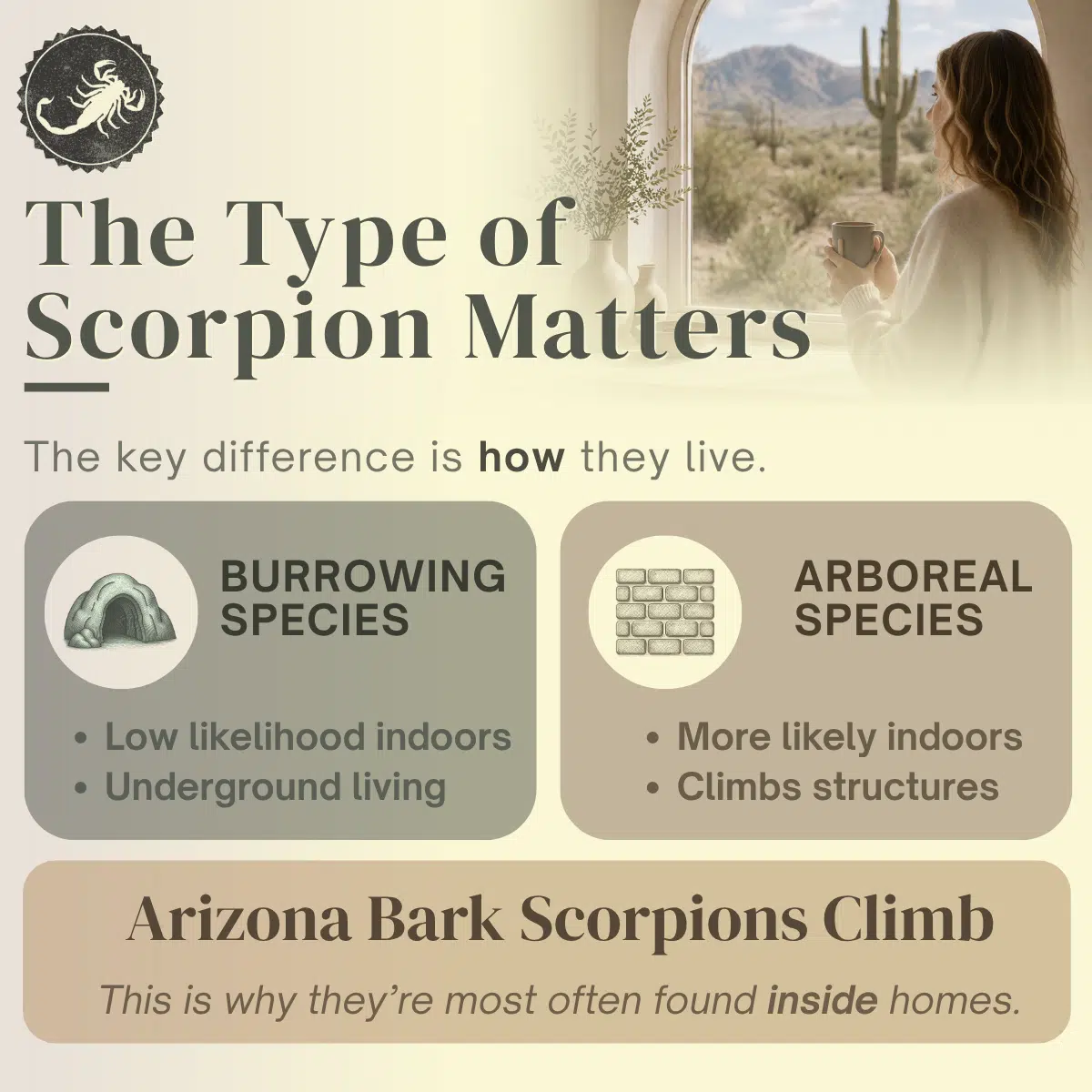
In Arizona, the most important distinction is between burrowing species and arboreal species.
Burrowing scorpions, such as the Giant Desert Hairy, live primarily underground and rarely enter homes.
The Arizona Bark Scorpion is different. It is an arboreal, vertical climber, capable of scaling walls, block fences, and structural surfaces with ease. It lives in trees, walls, and man-made environments, which is why it is the species most commonly found inside homes.
This is also why Arizona experiences more indoor sightings and sting incidents than many other states, a pattern reflected in national reporting data.
What a Standard Inspection Can Reveal — If You Know How to Read It
While inspectors are not evaluating scorpions directly, their findings can still provide insight.
A trained perspective looks beyond the checklist and evaluates:
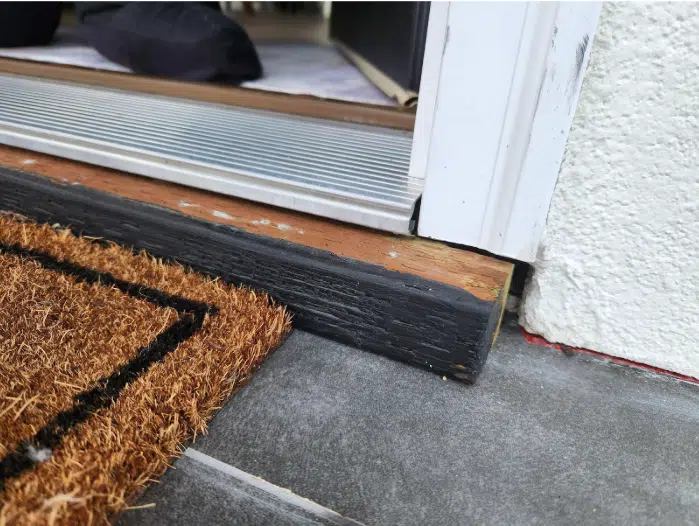
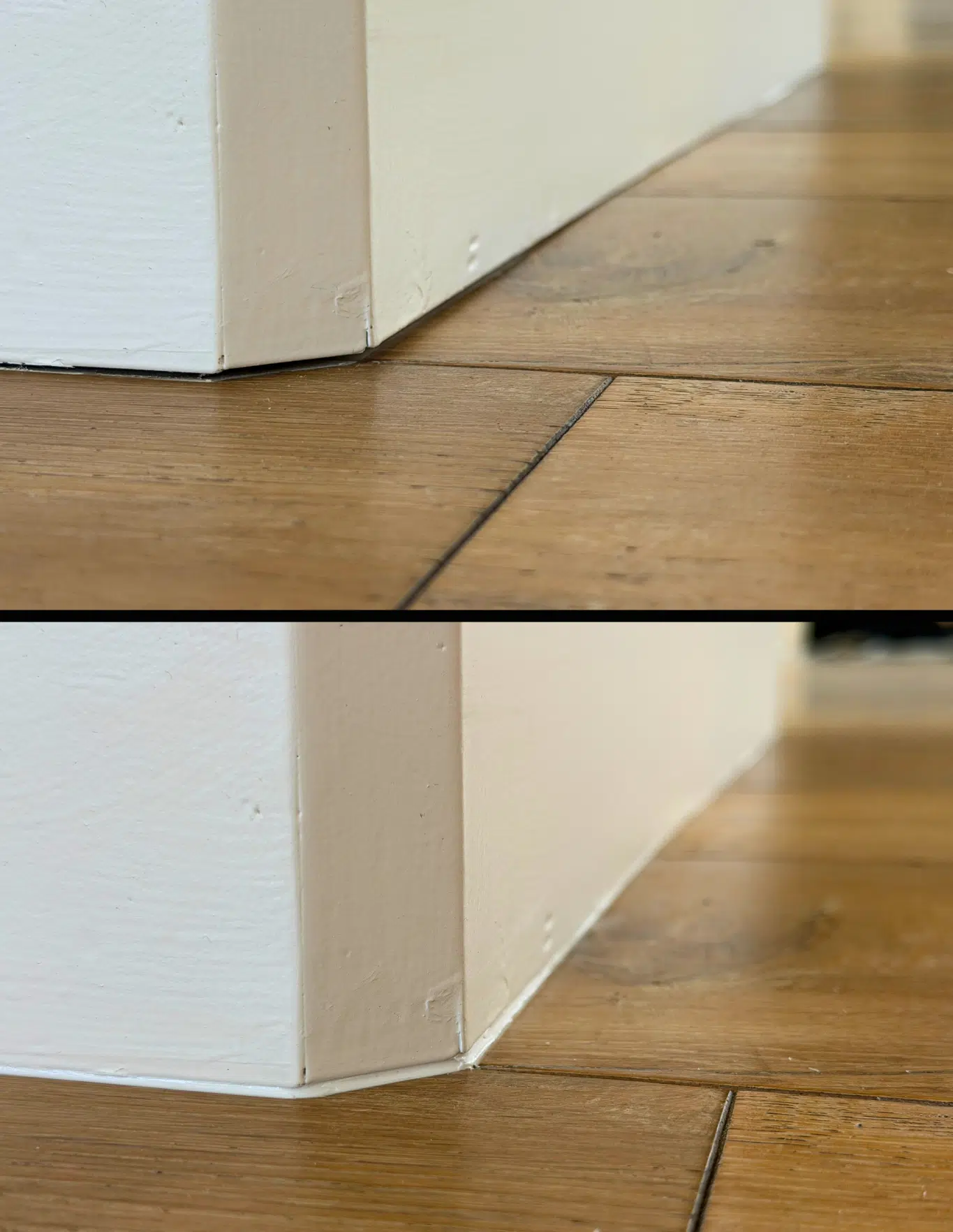
- How well the home is sealed at a micro level
- Whether gaps, penetrations, and transitions are present
- Signs of contractor-grade sealing attempts versus true structural sealing
Most homes have some level of sealing. Very few have what would be considered Building Performance Sealing, a system designed to control air movement, pest entry, and structural gaps at a high level.
That distinction matters.
Because scorpion entry is not about one large opening. It’s about many small opportunities across the structure.
The Real Starting Point: The Neighborhood
Before stepping onto the property, a meaningful evaluation begins with the surrounding environment.
Scorpions move through patterns and pathways, not randomly. These pathways are influenced by:
- Irrigation and moisture patterns
- Tree canopy and shade density
- Golf courses, parks, and greenbelts
- Drainage areas and wash systems
- Density of surrounding homes
These conditions create what can be understood as scorpion paths, consistent movement zones through neighborhoods and properties.
Some homes sit directly within those paths. Others sit just outside them. The difference is often predictable.

Then the Property Itself
Once on-site, the focus shifts to how the structure interacts with that environment.
This includes:
- Entry points at transitions and penetrations
- Shaded zones and protected areas
- Landscaping density and proximity to the structure
- Neighboring influences and shared conditions
In many cases, the question is not:
“Are there scorpions here?”
It is:
“How easily could they enter, and how often would conditions support it?”
Real-World Perspective
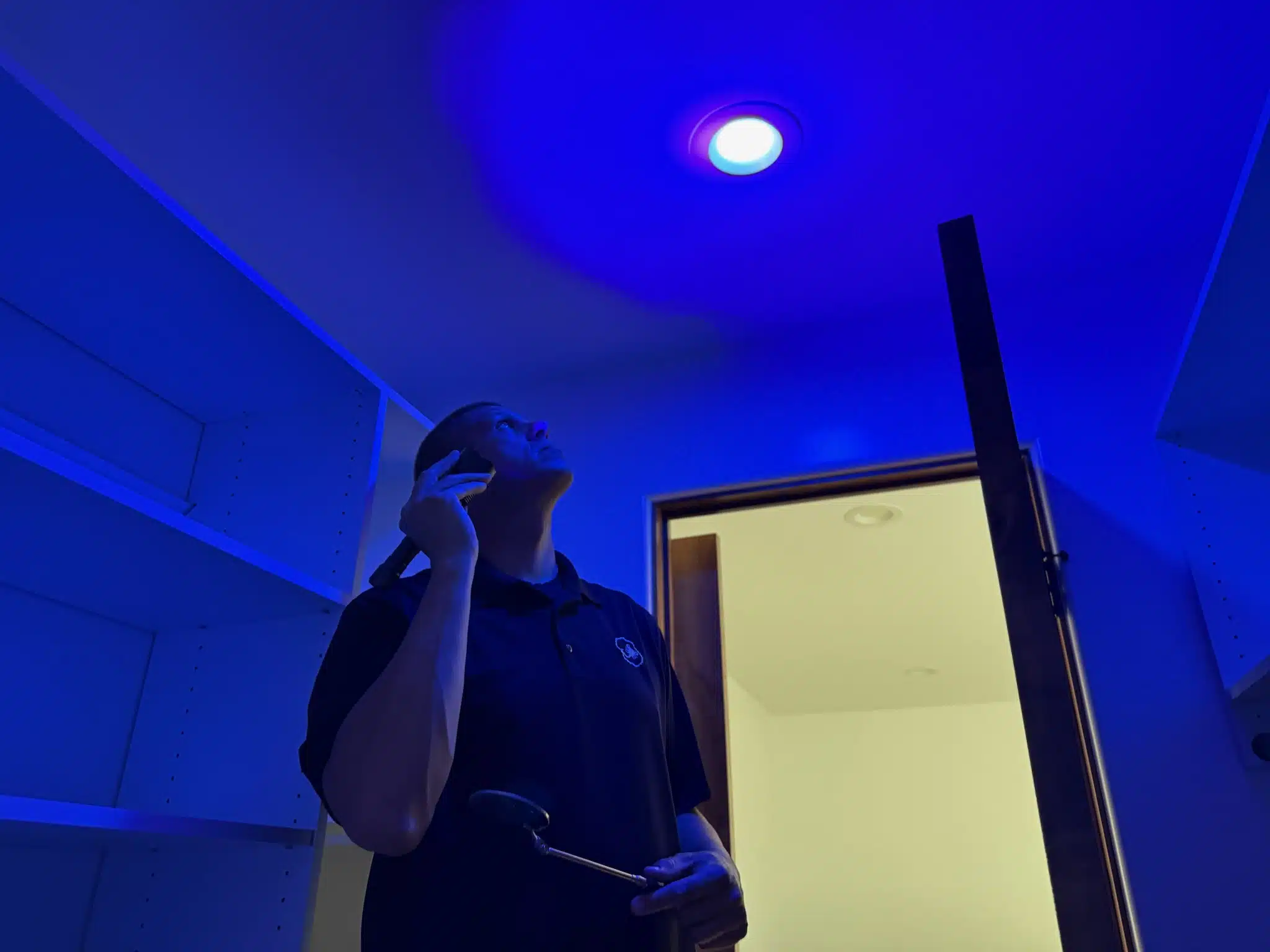
At a training property in Tempe, an acre lot surrounded by flood-irrigated properties, we conducted night inspections during a warm period in January.
Over four nights, 64 scorpions were documented.
The first was found during the day in a garden area.
That property represented a high-activity environment. Most homes are not at that level.
But it demonstrates two important points:
Scorpions can be active outside peak summer conditions.
And a short inspection window does not reliably reflect long-term reality.
Clues That Often Get Missed
Even when scorpions are not visible, evidence of concern often is.
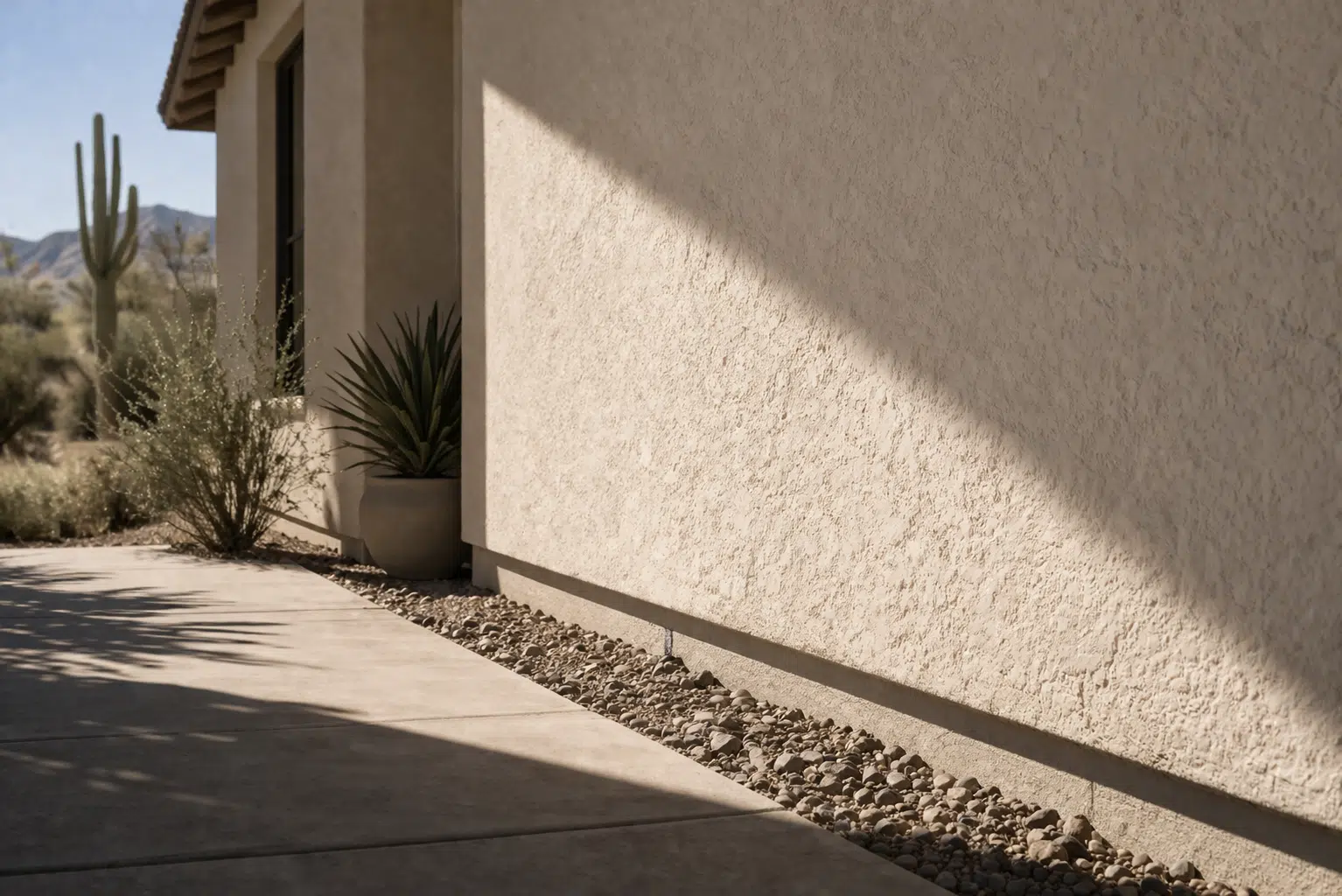
White powder around the perimeter, commonly Diatomaceous Earth, is a frequent sign. Multiple scorpion spray products or repeated DIY treatments also indicate prior awareness.
These are not solutions. They are indicators that someone has already encountered the issue.
Questions Worth Asking Before You Close
A standard disclosure form may not tell the full story.
It is reasonable to ask directly about sightings or stings and to request recent pest control records. These records often show what is being treated, how frequently, and whether scorpions have been a concern.
Additional insight can come from those who service the property regularly, such as landscaping or pool professionals. They often observe patterns that are never formally documented.
Timing Changes the Outcome
The most effective time to address scorpion risk is before the home is fully lived in.
During construction is ideal. During a remodel is next. Before move-in is highly effective.
Once a home is occupied, access becomes limited. Storage fills gaps. Visibility decreases. A scorpion can remain hidden for extended periods inside a furnished home.
There Is No Instant Fix — Only a Process
Scorpion control is not a one-time event.
It is not achieved through a single spray or treatment.
It is a process based on:
- Structure
- Environment
- Entry points
- Long-term management
When approached correctly, it can be controlled and prevented. But it requires understanding how all of these factors interact.
A More Effective Way to Approach It
At Seal Out Scorpions, the focus is not on reacting to sightings.
It is on understanding and controlling how scorpions:
- Move through neighborhoods
- Interact with properties
- Enter and exist within structures
This is where concepts like Building Performance Sealing and Pest Barrier Integrity come into play, addressing the structure as a system, not just treating symptoms.
If You’re in the Inspection Period
This is the window where clarity is most valuable.
A surface-level evaluation can be done over the phone at no charge. With an address and a conversation, it is often possible to assess neighborhood patterns, property positioning, and general risk. Guidance can also be provided for those who prefer a do-it-yourself approach.
For a deeper understanding, an onsite assessment allows a trained professional to evaluate the structure, identify entry points, and outline what it would take to properly address the property.
Final Thought
Scorpions are not random.
They are not colonies.
They are not solved with a single treatment.
They are predictable patterns interacting with a structure.
Those patterns can be understood.
And once understood, they can be controlled.
The difference is whether that understanding happens before you move in, or after.
About Georgia Clubb & Seal Out Scorpions®
Seal Out Scorpions is led by Georgia A. Clubb, Advanced Scorpion Specialist, together with William L. Clubb and Michael C. Golleher — Certified Building Analysts and Envelope Professionals through the Building Performance Institute, with additional Building Science Certificates and studies in Urban & Industrial IPM through Purdue University. Their team includes licensed pest management and sealing specialists who pioneered Building Performance Sealing to solve scorpion problems at the structural level.