







Scorpions Are a Structural Problem: How to Engineer a Scorpion-Free Home
By Georgia A. Clubb, Advanced Scorpion Specialist, Founder of Seal Out Scorpions®
Quick Answer
Scorpions enter homes through structural gaps and micro-air leaks, not because of food sources.
Spraying kills scorpions but does not prevent entry.
Most sealing fails because it is surface-level, fragmented, and uncoordinated.
A scorpion-free home requires barrier integrity engineered from the inside out.
If one scorpion gets inside, there is a definable entry point, but if you seal it, they will reroute to another point not sealed.
The Problem Most People Misunderstand
Most advice treats scorpions like a pest control issue.
They are not.
Scorpions are a barrier integrity problem.
They follow structural pathways, airflow patterns, moisture gradients, and hidden voids within the home. They are not roaches chasing food, ants following crumbs, or a problem solved by routine spraying.
This is why so many homeowners say, “We’ve done pest control… and we’re still seeing scorpions.”
They’re solving the wrong problem.
Why Typical Solutions Fail (Even When Done Well)
Pest control alone focuses on killing scorpions, not stopping entry. It relies on chemicals that degrade over time and treats exposure, not cause.
Contractor or pest control grade sealing is typically performed in isolated spots, not as a system. It uses surface materials that separate or fail, does not account for micro-level structural pathways, and often ignores how sealing impacts airflow and mechanical systems.
The result is predictable. Homeowners spend hundreds to thousands of dollars and still see scorpions.
What We See in the Field (Over 40% of Cases)
Since 1999, when this work began in a highly infested neighborhood in Tempe, Arizona, one pattern has repeated itself.
Over 40% of our work starts after a home has already been sealed once or multiple times.
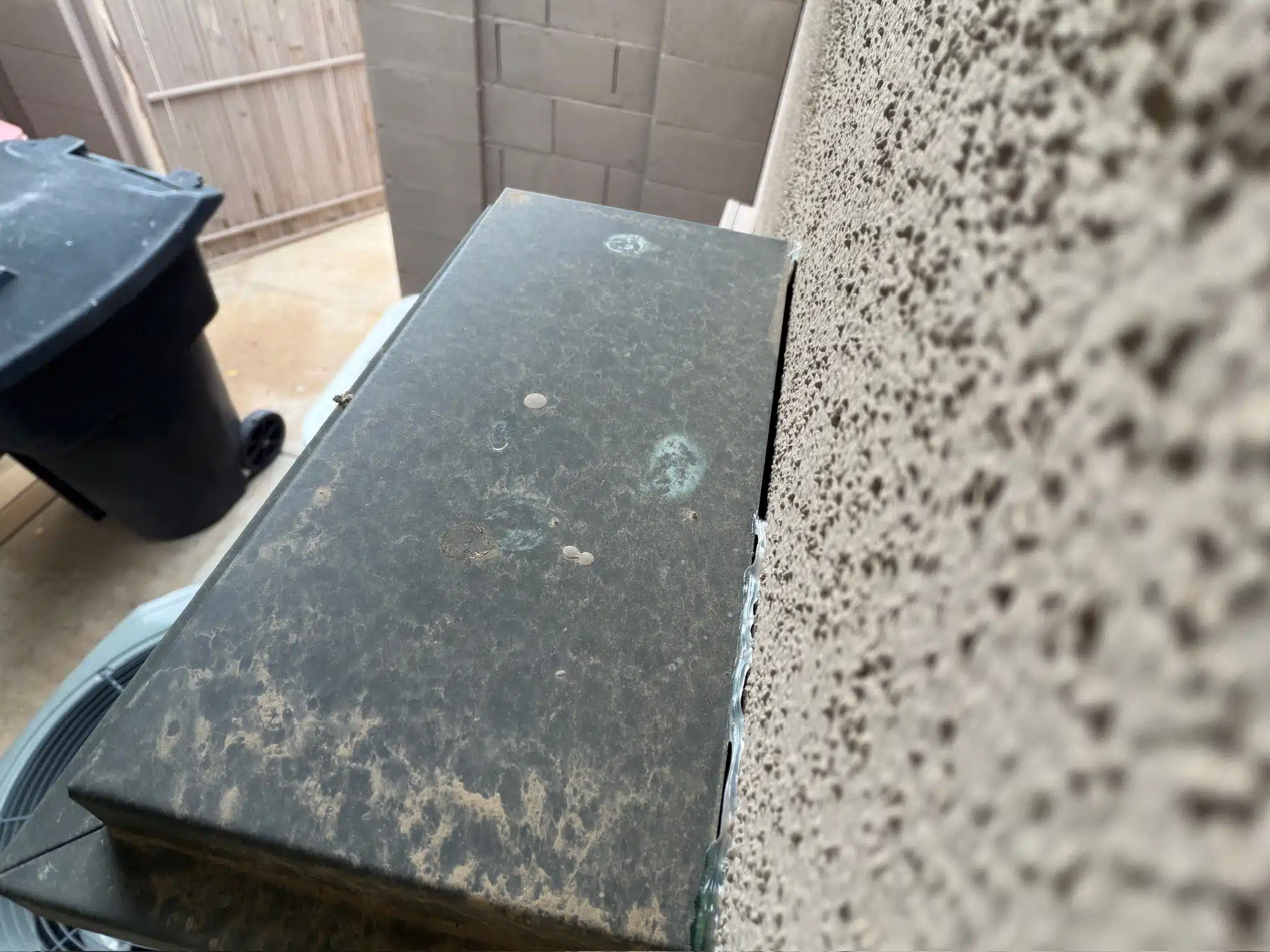
We call it sealant scar tissue.
Layers of failed foam or caulk. Fractured, spot repairs. Inconsistent materials. Missed pathways behind walls, ceilings, and components.
When we evaluate these homes, we inspect ceiling to floor, inside and outside, across all structural transitions.
And regardless of who did the previous work, the pattern is the same.
The Missing Piece No Trade Owns
Homes are built by framers, electricians, plumbers, HVAC installers, insulation crews, and finish contractors. Each trade completes its portion.
No one is responsible for integrating the structure at the micro level.
There is no code, no licensing category, no standardized training, and no certification for pest-specific barrier engineering.
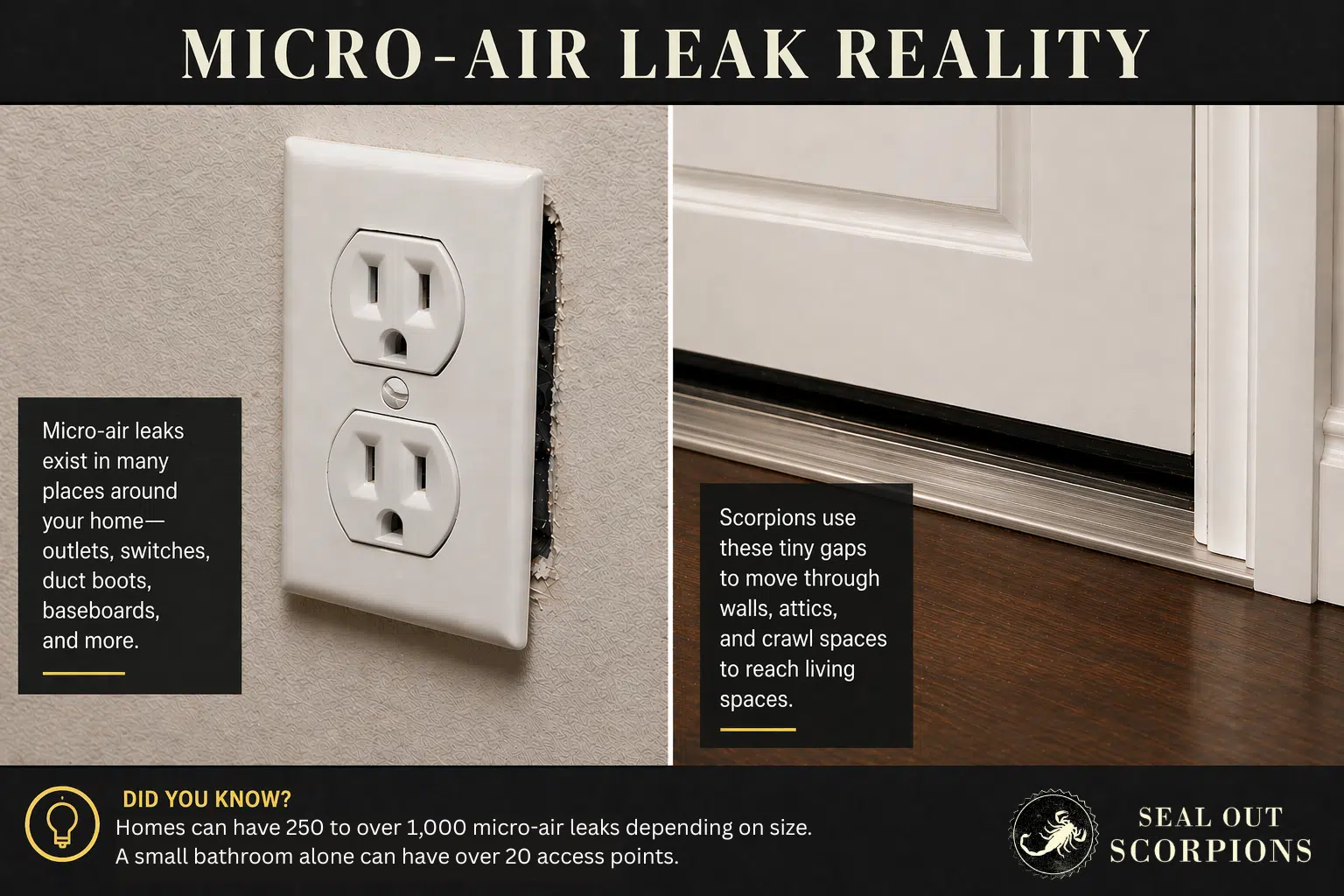
Homes can have 250 to over 1,000 micro-air leaks depending on size. A small bathroom itself can have over 20 access points. While some may be obvious, most are never imagined until they are pointed out.
Homes can be well built and still allow scorpions inside.
Macro weatherization does not equal micro-air sealing. Termite protection does not equal scorpion exclusion. Builder standards do not equal barrier integrity.
What Actually Works: Engineering Barrier Integrity
To engineer a scorpion-free home, the approach must be system-based.
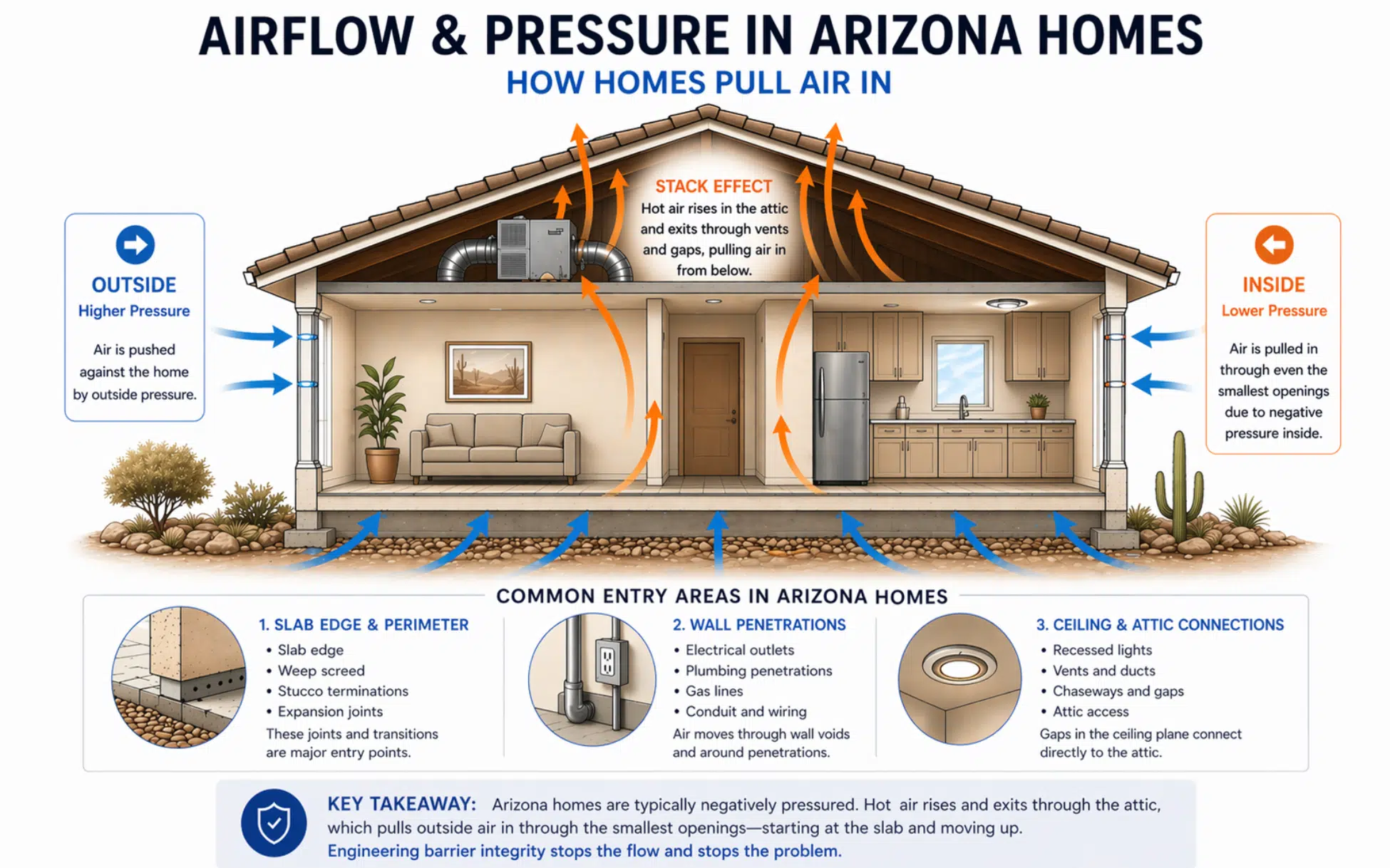
Structure is the primary layer. This includes micro gaps and expansion points, weep screeds and base transitions, wall void connections, and ceiling penetrations and hidden pathways.
Environment is the pressure layer. This includes neighborhood density, moisture patterns, and landscaping and ground conditions, especially in areas like Arizona and the Southwest desert.
Control is the support layer. Medication can help manage symptoms if specific and strategic. In general pest control, medications are often rotated and are broad spectrum. These are not typically strategic for scorpions and can flush scorpions inside and up walls, ceilings, and second stories to escape irritants applied at ground level.
Behavior is the reality layer. Doors, lighting, habits, and how people interact with the home and environment all play a role.

Key Truths About Scorpion Control
Scorpions do not randomly enter homes. They follow structural pathways.
If one scorpion gets inside, there is a definable entry point, but sealing one point alone will not stop them.
You cannot chemically treat your way out of a structural failure.
Most sealing work is cosmetic, what is obvious, but not functional as a whole system.
Barrier integrity determines exposure, not spray frequency.
Think of It This Way
Pest control is medication. Structural engineering is surgery.
Medication can help manage symptoms if specific and strategic.
But if the structure is compromised, the problem continues.
What an Engineered Home Actually Delivers
A properly engineered home creates a win-win-win outcome.
Pest protection means no interior encounters and a controlled, predictable environment.
Home performance improves through better weatherization, increased energy efficiency, reduced utility strain, and longer HVAC system life.
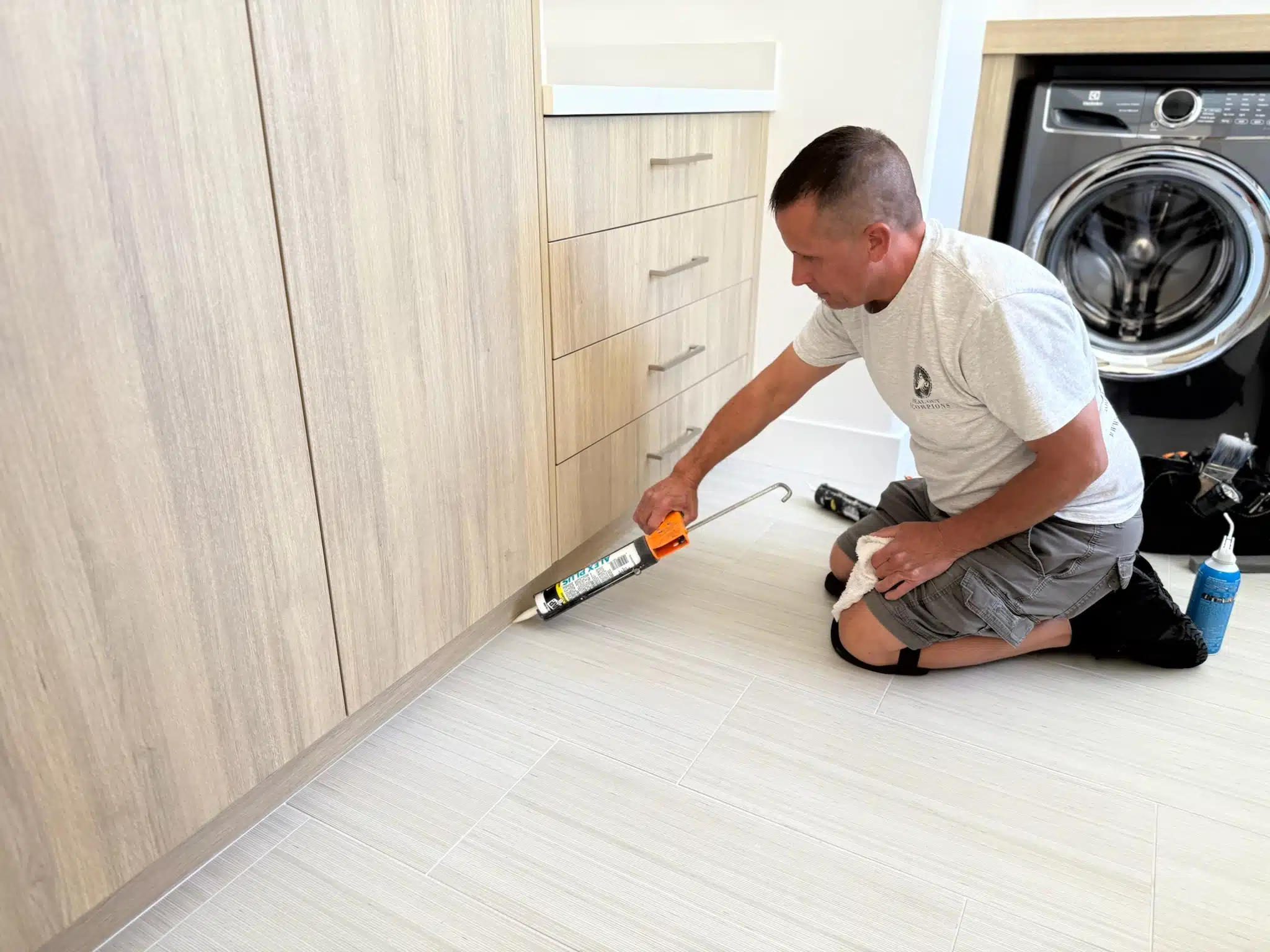
Aesthetic and structural integrity are preserved with clean, intentional sealing, no unnecessary material buildup, and no damage to ventilation or system performance.
Where This Matters Most
This approach was developed and tested in high-pressure areas across Maricopa County and Pinal County, Arizona, often considered among the most challenging scorpion environments in the United States.
The principles apply beyond Arizona to other desert regions, other states, and other countries, and can be applied to other pests as well.
A Different Outcome for Homeowners
A home that starts with fear, anxiety, and uncertainty should end with understanding, control, and confidence.
You should understand why scorpions were getting in and why they no longer are.
You Don’t Have to Hire Us to Benefit From This
Understanding this model can help you evaluate past services, avoid wasted spending, ask better questions, and make more informed decisions.
Whether you work with a pest control company, hire a contractor, or pursue a more engineered approach, the key is knowing the difference between treatment and true prevention.
What This Means for Your Home
Scorpion control in Arizona requires more than routine pest control.
Preventing scorpions in homes starts with structural sealing.
Many pest control services fail because they do not address entry points.
Home sealing must be done as a system by highly trained technicians who understand building science, not just how to apply caulk or sealant products.
Building science plays a critical role in long-term pest prevention.
Barrier integrity determines whether scorpions can enter a home.
Understanding scorpion entry points is key to stopping them.
Final Truth
Most people are trying to solve a scorpion problem.
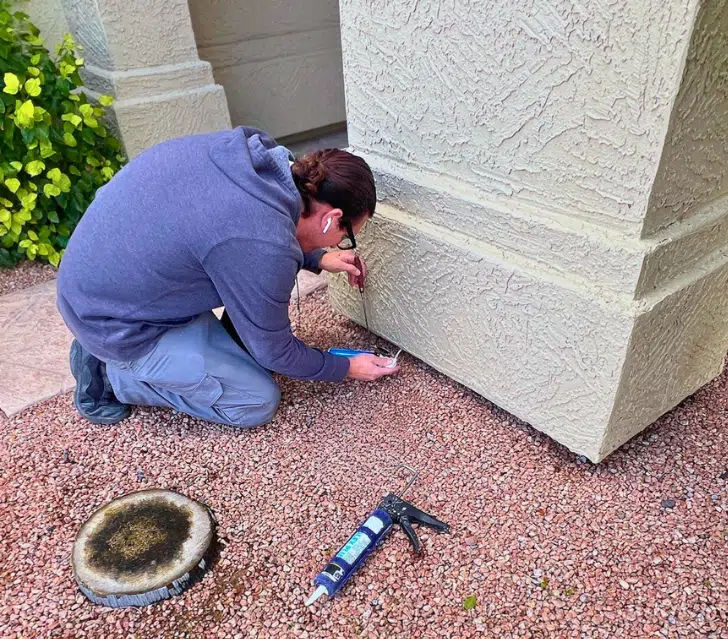
What they actually have is a structural problem that has not been engineered yet.
You don’t want random stock photos, you want visual proof + visual explanation.
Your blog is teaching a new model, so your images need to do one of two things:
About Georgia Clubb & Seal Out Scorpions®
Seal Out Scorpions is led by Georgia A. Clubb, Advanced Scorpion Specialist, together with William L. Clubb and Michael C. Golleher — Certified Building Analysts and Envelope Professionals through the Building Performance Institute, with additional Building Science Certificates and studies in Urban & Industrial IPM through Purdue University. Their team includes licensed pest management and sealing specialists who pioneered Building Performance Sealing to solve scorpion problems at the structural level.