






Scorpion Control: Performing a Service vs. Solving a Problem
Responsibility vs. Achievement: The Difference Between Performing a Service and Solving a Problem
Performing a service is a responsibility. Solving a problem is an achievement.
There is an important difference between the two, particularly in the pest management and home sealing industries.
A contractor can perform excellent workmanship, use quality materials, and complete every item on an estimate. A pest management professional can select an appropriate pesticide, follow the manufacturer’s label, and apply it correctly.
Both professionals may have fulfilled their responsibilities.
But what happens when the homeowner continues finding scorpions? Was the job successful? That depends on what we’re measuring.
If success is measured by completing the contracted service, perhaps it was. But if success is measured by solving the problem that caused the homeowner to hire the company, the answer may be quite different.
This distinction has influenced how I’ve approached scorpion control since founding Seal Out Scorpions in 1999.
The quality of the service matters. But the purpose of the service matters more.

When the Work Is Correct, but the Problem Remains
Consider a home that has been professionally sealed, treated regularly for scorpions, and maintained according to the recommendations of its service providers.
Yet scorpions continue appearing inside.
The sealing contractor may point to the quality of the workmanship. The pest control company may confirm the correct products were applied at the appropriate intervals.
Both may be right.
The problem is that scorpions don’t respond to just tasks completed. They respond to their environment.
They take advantage of structural openings, protected harborages, prey availability, moisture, temperature, and opportunities for movement.
The Arizona bark scorpion (Centruroides sculpturatus) is especially well adapted to residential environments in the Southwest.
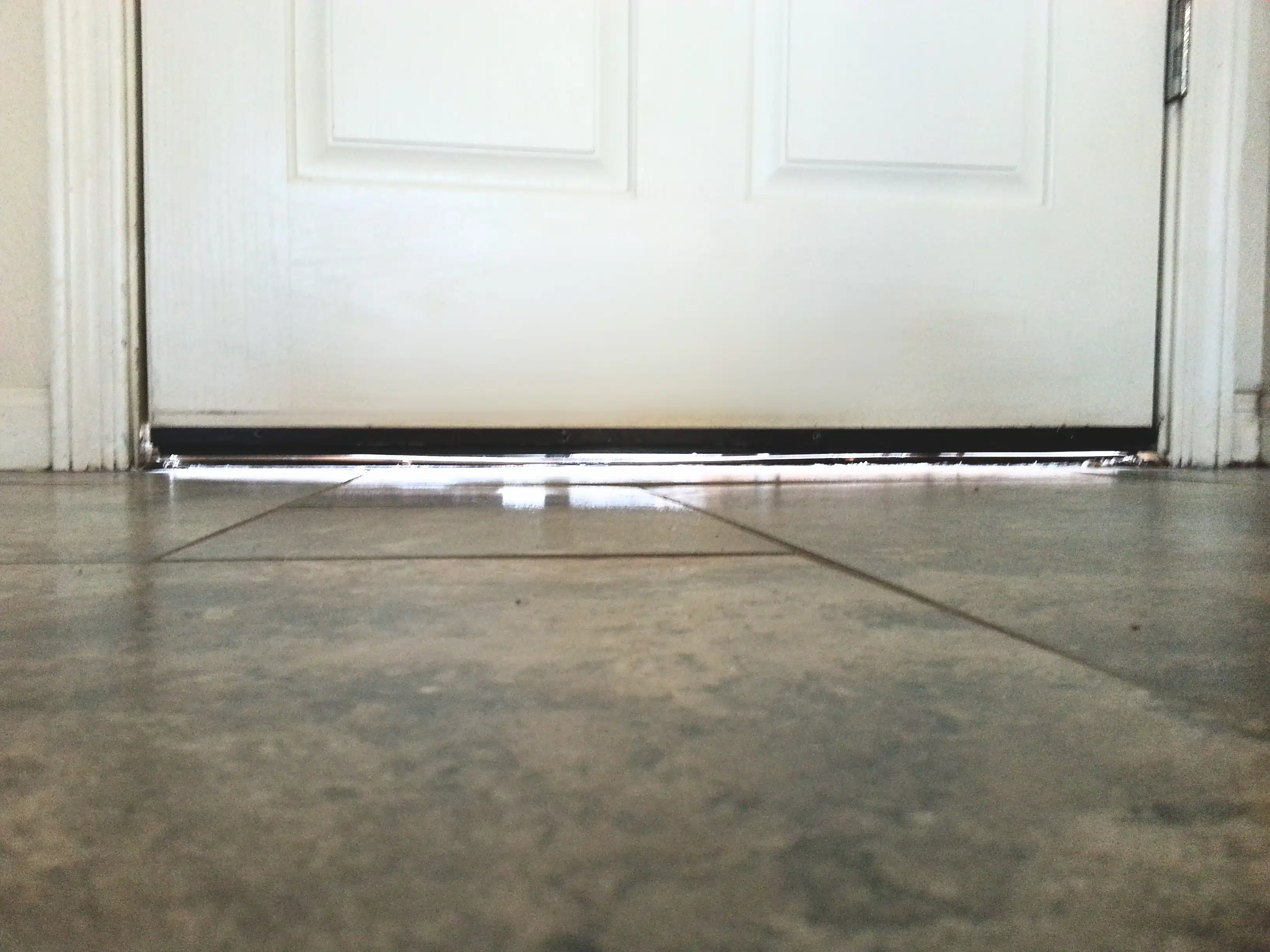
Research published by the University of Arizona Cooperative Extension documents how bark scorpions use hollow-block walls as harborages, enter through poorly fitted doors and structural openings, and move within wall cavities before emerging through interior penetrations.
In one reported investigation of harborage preferences, 95% of the scorpions studied preferred hollow-block walls over other available refuge options. The study illustrates why a home’s surrounding structures and construction features can be just as important as the scorpion found inside.
This is one reason a perfectly executed pesticide application may not produce satisfactory control. The scorpion may spend much of its time protected inside structural voids, away from treated surfaces.
Likewise, a well-applied sealant may remain intact while another pathway, such as a worn door sweep, continues to permit entry.
The service was performed.
The problem wasn’t necessarily solved.
What Science Tells Us About Scorpion Control
Scorpion control presents challenges that are often underestimated in conventional pest management.
Scorpions are arachnids, not insects. Their biology, behavior, protective harborages, and patterns of movement differ significantly from many of the household pests targeted by routine pesticide applications.
The University of California’s Statewide Integrated Pest Management Program identifies several limitations of chemical control. Scorpions frequently remain concealed in cracks and crevices, avoiding exposure to treated surfaces. Adult scorpions can also be more difficult to kill because of their larger body size and thicker cuticle. The university recommends environmental modification and structural exclusion in conjunction with appropriate pesticide use.
A scientific review published October 24, 2026, in the Journal of Integrated Pest Management, further reinforces these principles.
The review, Scorpions of the United States: Species, Distribution, Ecology, and Management, examines scorpion biology and management strategies, including the limitations of chemical treatments. It emphasizes physical exclusion, habitat modification, monitoring, and appropriately targeted pest management.
These findings are consistent with much of what we have observed in residential properties throughout the Phoenix metropolitan area.
Pesticides have an important role. They can reduce populations, suppress activity, and contribute to overall control.
But a pesticide does not repair a structural opening. And sealing a structural opening does not eliminate the scorpion population living in the neighboring block wall.
One strategy addresses pest pressure. The other addresses the property’s ability to resist that pressure.
Both may be necessary.
The science supports an integrated approach, but science must also be applied correctly to the individual property.
Knowing what works is important. Understanding why something isn’t working is where expertise becomes valuable.
The Warranty Represents Responsibility
A warranty holds the service provider accountable for the quality of the work performed.
At Seal Out Scorpions, our workmanship warranty addresses the craftsmanship and application of sealing materials, including qualifying failures related to improper bonding, curing, and other covered conditions.
This is a professional obligation.
If a seal fails because it was improperly installed, the homeowner shouldn’t be responsible for correcting our workmanship.
But structural performance involves more than the condition of a single seal.
Doors are mechanical systems. Weatherstripping wears. Materials expand and contract. Homes settle. Environmental exposure affects the performance of exterior materials.
And not every opening should be permanently sealed. Building drainage, ventilation, and other functional requirements must be respected.
Understanding these relationships is part of Building Performance Sealing.
A contractor needs to know how to perform the work. A specialist also needs to understand how that work contributes to the overall performance of the building.
The warranty establishes responsibility for our workmanship. It does not, by itself, establish that the scorpion problem has been controlled.
What Should a Scorpion Control Company Do When Its Original Strategy Isn’t Working?
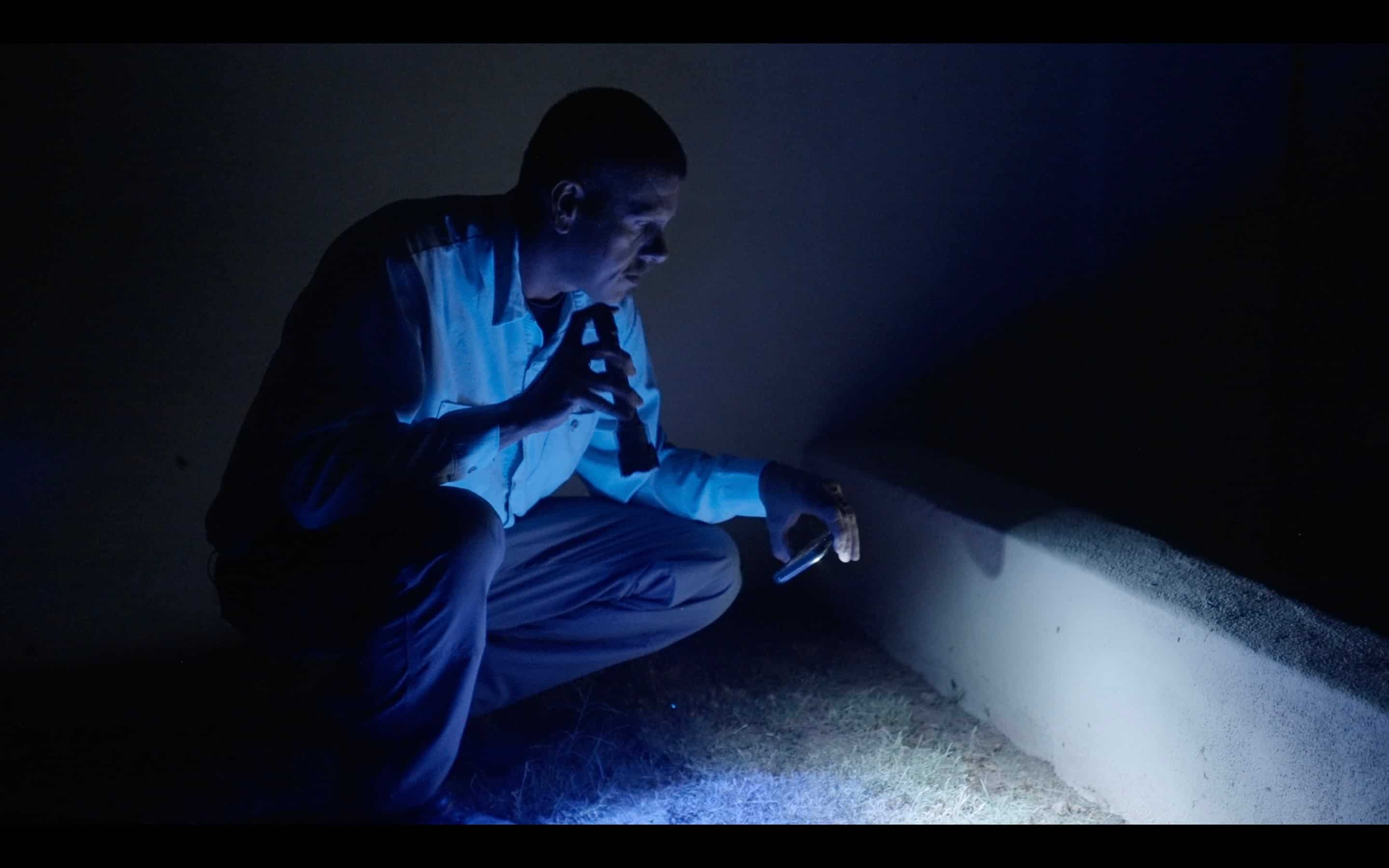
Investigate. Reevaluate the diagnosis. Look for patterns, overlooked conditions, and evidence that challenges the original assumptions.
Sometimes that means recognizing a structural weakness. Sometimes it means questioning a pest management strategy. Sometimes the surrounding environment or the homeowner’s practices must be addressed.
And sometimes it means reassessing the seals.
Repeating a service demonstrates activity. Identifying why that service isn’t achieving results demonstrates expertise.
That distinction is central to our philosophy at Seal Out Scorpions.
The Guarantee Represents Our Commitment to Achievement
This is where our philosophy goes beyond performing a service.
Homeowners don’t hire Seal Out Scorpions because they want caulking, foam, weatherstripping, or pesticide applications.
They hire us because they want scorpions out of their homes.
They want to walk barefoot without worrying about what is on the floor. They want their children and grandchildren to be comfortable in their homes. They want to stop searching every room at night and wondering where the next scorpion will appear.
That is what they are trying to accomplish.
Our guarantee is built around the commitment to help achieve and maintain meaningful scorpion control.
We guarantee our professional craftsmanship, sealing methods, service, education, and partnership. When a participating client continues experiencing scorpion problems, our published guarantee provides continued professional support and guidance, at no charge, when acceptable controls are not being achieved.
That doesn’t mean we can control every environmental condition, eliminate every scorpion in a neighborhood, or promise that another scorpion will never approach a property.
It means our responsibility doesn’t simply end when the service is completed.
If the controls aren’t working as intended, we need to understand why.
Is there an unidentified entry pathway? Has a mechanical barrier lost integrity? Is the surrounding pest pressure greater than anticipated? Is the pest management strategy appropriate for the current conditions? Has something changed in the property or neighborhood?
These questions require investigation, not assumptions.
Sometimes the answer is a relatively minor adjustment. Other times, a complex property requires a more comprehensive intervention.
The objective is to identify the cause and determine the appropriate corrective strategy.
A workmanship warranty asks whether the job was done correctly. A results-oriented guarantee asks whether the strategy is achieving its purpose.
They are different commitments, and both have value.
The Pest Barrier Integrity System: Connecting the Work to the Result
Over the years, we have worked with thousands of residential properties, including many where previous sealing or pest control efforts failed to produce satisfactory results.
One pattern has remained consistent: scorpion control is seldom dependent on a single product, application, or service.
It depends on the relationship between pest pressure and the property’s protective barriers.
This relationship is the foundation of our Pest Barrier Integrity System (PBIS).
The principle is straightforward:
The property’s protective barriers must be stronger than the pest pressure acting against them.
Pest pressure is influenced by conditions such as scorpion populations, available harborages, moisture, prey, seasonal activity, and movement from neighboring properties.
Barrier integrity involves the combined effectiveness of structural exclusion, pest management, environmental conditions, mechanical components, maintenance, and homeowner practices.
A property with relatively low scorpion pressure may achieve satisfactory control with basic preventive measures.
Another property, located alongside an arroyo, surrounded by heavily populated block walls, or exposed to substantial neighborhood activity, may require considerably stronger interventions.
The same service can produce very different results on two properties.
That’s why I don’t believe a service checklist alone is an adequate measure of success.
The Pest Barrier Integrity System is our framework for evaluating these interacting conditions and developing an appropriate control strategy. It draws on established principles of Integrated Pest Management, building science, and environmental management, combined with our field experience.
This philosophy is also consistent with the U.S. Environmental Protection Agency’s Integrated Pest Management principles, which emphasize identification, monitoring, prevention, control decisions, and continued evaluation rather than reliance on a single treatment method.
The purpose of PBIS isn’t to make scorpion control more complicated.
It’s to understand the complexity that already exists so we can make better decisions.
Why Achievement Requires a Partnership
There is another distinction that must be understood.
A service provider can take responsibility for professional work, but achieving long-term control often requires participation from the property owner.
I frequently compare scorpion control to healthcare because many of the same principles apply.
A physician may properly diagnose a condition, prescribe the correct medication, or perform a successful procedure.
But a successful procedure and a successful long-term outcome are not always the same thing.
Recovery and continued health may depend on follow-up, environmental conditions, lifestyle decisions, maintenance, and the patient’s participation.
The physician has professional responsibilities. The patient has responsibilities as well.
Scorpion control works on a similar principle.
We can provide the professional evaluation, structural corrections, pest management strategies, technical expertise, and ongoing guidance.
But if exterior doors are left open, landscape conditions continually support scorpion activity, recommended maintenance is neglected, or incompatible pest management practices undermine the strategy, the results may be compromised.
This is not about placing blame on the homeowner.
It’s about recognizing that the factors affecting success extend beyond the service appointment.
Our clients are partners in achieving and maintaining control.
The homeowner contributes knowledge of the property’s history, reports continuing activity, maintains appropriate conditions, and follows the agreed recommendations.
We contribute professional expertise, technical execution, investigation, and guidance.
The outcome depends on how effectively these responsibilities work together.
Responsibility can be assigned to an individual. Achievement often requires a team.
How Do We Know We’ve Succeeded?
This may be the most important question of all.
A completed work order documents what was performed.
An application record documents the pesticide used, concentration, location, and other required details.
An invoice documents the financial transaction.
None of these, by themselves, establishes that the homeowner’s scorpion problem has been solved.
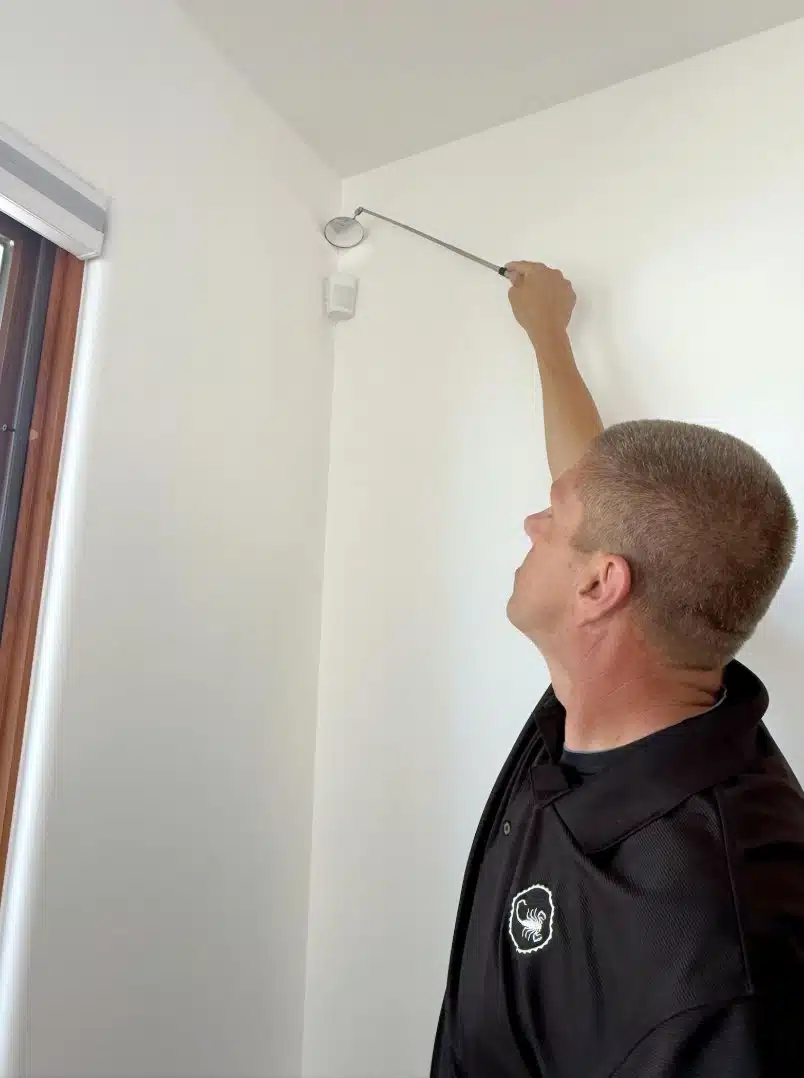
Are scorpions continuing to enter the living spaces? Has activity declined? Are encounters occurring in specific locations? Are the protective barriers maintaining their integrity? Has the homeowner’s tolerance for scorpion activity been addressed?
We also have to account for time.
Scorpions are not uniformly active throughout the year. Their activity and exposure to control measures change with environmental conditions. A period without sightings can be encouraging, but it isn’t always sufficient evidence that the underlying vulnerabilities have been corrected.
That’s why lasting control must consider both observed activity and the property’s ability to resist future pest pressure.
A reduction in scorpion encounters is valuable.
Preventing entry into occupied spaces is often more important.
Developing barriers and management strategies that remain effective through changing seasonal conditions is what makes the achievement durable.
The goal is not to continue performing services indefinitely without understanding why they are necessary.
The goal is to establish effective, sustainable control appropriate to the property and the homeowner’s expectations.
The Difference Defines Our Philosophy
There are many competent contractors and pest management professionals who take pride in their work.
Craftsmanship, technical knowledge, and professional responsibility are essential.
But in a specialized field such as scorpion control, technical competence must serve a larger purpose.
I don’t want our team to be satisfied simply because the sealing looks beautiful, the pesticide was applied correctly, or the scheduled work was completed.
I want us to ask whether we accomplished what we set out to do.
If we haven’t, I want to know why.
Sometimes the answer requires more technical expertise. Sometimes it requires a different strategy, better communication, additional investigation, or greater homeowner participation.
And sometimes it requires acknowledging that the original approach was incomplete.
That’s how professionals improve. That’s how better methods are developed. And that’s how service experience becomes meaningful expertise.
Since 1999, I believe the distinction between responsibility and achievement is one of the most important principles we can teach our technicians, our leadership, and our clients.
A service is something we perform. A problem is something we work to solve. A warranty holds us accountable for our work.
A guarantee represents our continuing commitment to the objective, within the terms of the service and the responsibilities of our partnership.
And the Pest Barrier Integrity System provides a framework for bringing those elements together.
We don’t measure our success simply by the services we perform. We measure it by the problems we solve.
That is the standard we strive for at Seal Out Scorpions.
About Georgia Clubb & Seal Out Scorpions®
Seal Out Scorpions is led by Georgia A. Clubb, Advanced Scorpion Specialist, together with William L. Clubb and Michael C. Golleher — Certified Building Analysts and Envelope Professionals through the Building Performance Institute, with additional Building Science Certificates and studies in Urban & Industrial IPM through Purdue University. Their team includes licensed pest management and sealing specialists who pioneered Building Performance Sealing to solve scorpion problems at the structural level.